A slot round can finish without a payout and still become one of the most memorable events in a session. When valuable symbols appear close to a winning line, the screen produces a sense of proximity that an ordinary failed combination may lack.
Visual presentation can influence how users process an outcome. The mathematical value stays at zero, yet the emotional response can differ depending on symbol position and the moment when failure becomes clear.
Recent research found that a short learning exercise could alter the amount of attention directed towards near-miss imagery. The findings suggest that previous associations help determine how people process such results. Now, Casino Market experts explore what this means for product teams and responsible engagement.
Order a turnkey or White Label casino solution and build a modern gambling project with professional software, game integrations, and expert operational support.
Why a Losing Spin Can Appear Unfinished
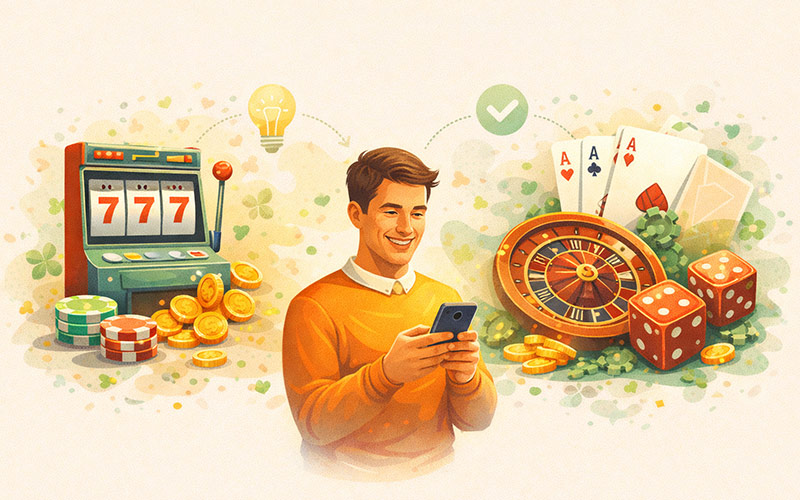
The reels can create suspense long after the financial outcome is clear. A combination may include several matching pictures, while one symbol prevents any reward. This arrangement is commonly described as a near miss. The customer receives no prize, although the screen looks physically close to a successful combination. Research has linked such events with increased attention and continued gambling motivation in some experimental settings.
The effect comes partly from visual proximity. A jackpot symbol positioned just above the payline can appear significant because only a small physical distance separates it from the winning location.
That distance has no predictive value. Regulated random games use outcome generation that must remain acceptably unpredictable, and the UK Gambling Commission prohibits game features that mislead customers about the likelihood of a particular result.
For a new operator, this distinction is essential. Screen design can alter perception, while the probability behind the next round stays independent.
Two Versions of the Same Losing Outcome
A close-looking failure can appear in several forms. Research shows that the position of the important symbol affects physiological processing and subjective reactions.
Suspense until the Last Moment
One common sequence keeps uncertainty alive until the final reel stops. Matching icons land first, so the remaining position decides whether the combination pays.
Anticipation continues through most of the animation. The disappointment appears only when the decisive image settles outside the required position.
Previous neurophysiological studies have found that some near-miss outcomes activate processes associated with reward evaluation. Research using brain imaging has also linked them with activity in regions that respond to actual wins.
Failure Becomes Clear Earlier
Another format reveals an unsuccessful outcome before every visual element has finished moving. The participant already knows that the round cannot generate a payout, but relevant jackpot imagery continues appearing afterwards.
That sequence produces a different cognitive pattern. The negative result arrives first, while later symbols still resemble a promising combination.
A 2020 EEG study examined 23 healthy participants and separated near misses according to their position before or after the payline. The researchers detected different electrophysiological responses between the two subtypes, which means grouping every near miss into one category may conceal meaningful distinctions.
What Reel Timing Changes for the User

Identical financial outcomes can produce different emotional responses. The moment at which certainty arrives shapes how the rest of the animation is interpreted.
Several aspects are especially important for product teams:
- Anticipation may last longer. When the decisive symbol appears at the end, uncertainty survives through most of the sequence. Earlier confirmation removes that suspense sooner and changes how the remaining movement is processed.
- Emotional signals arrive in another order. A classic near miss leads to disappointment after a promising start. The alternative sequence confirms failure first and then presents imagery associated with a potential reward.
- Visual focus may remain active. Valuable icons may continue to attract the eye even after the chance of a payout has disappeared. Their placement therefore affects more than the final screenshot.
- Repeated exposure may affect motivation. Some studies associate near misses with stronger willingness to continue gambling, while other research finds weaker or mixed behavioural effects. Context plays an important role in the final reaction.
The safest approach is to avoid treating the mechanism as a guaranteed engagement tool. Individual responses differ, and one visual pattern can generate excitement for one person and frustrate another.
How the Meaning of an Almost-Win Can Be Learned
Much of the earlier work concentrated on what appears on the reels. The newer experiment explored whether previous learning can reshape attention towards identical slot imagery. Researchers used the concept of derived relations. In simple terms, people can build connections between events based on information they learned earlier. Those associations may later affect behaviour even when the original teaching situation is absent.
The 2025 study applied this principle to slot outcomes. One group learned to connect close-looking unsuccessful combinations with loss. The second condition strengthened the association between the same imagery and the concept of almost reaching a win.
Nothing in the simulated game mathematics changed between the sessions. The intervention altered the meaning attached to what appeared on screen. That distinction makes the experiment particularly relevant for gambling businesses. Communication around a product can influence expectations before the user begins a new round.
The researchers created a controlled setup to separate learned interpretation from changes in game mechanics. Participants completed simulated slot tasks before and after the training procedure.
The main elements of the experiment:
- 24 recreational gamblers;
- two equal groups;
- simulated slot sessions;
- relational learning exercises;
- eye-tracking technology;
- pre- and post-training measurements.
Each simulated block contained 132 trials. The researchers used 18 wins, 36 near misses, and 78 ordinary losses, while every outcome stayed on screen for 2,000 milliseconds.
Eye movement supplied the central behavioural measure. Direction bias recorded how often a participant moved their gaze towards the relevant near-miss symbol. Duration bias measured the amount of time spent looking at that area.
The sample also matters for conclusion interpretation. The experiment involved recreational gamblers, and people with problem gambling were excluded. This means the findings cannot automatically describe every real casino audience.
The strongest part of the research appeared after the learning task. Both groups had shown broadly comparable visual behaviour before training, but their responses moved in opposite directions afterwards.
The results can be broken down into four main changes:
- The loss-trained group made fewer gaze movements. Average directional bias fell from 11.25 to 6 motions out of 36 possible near-miss trials. The decline equals approximately 47%.
- Their fixation became shorter as well. Mean gaze duration decreased from 646.17 milliseconds to 450.75 milliseconds. This represents a reduction of about 30%.
- The almost-trained condition moved in the opposite direction. Average directional bias increased from 10.17 to 14.17 movements. The difference is close to 39%.
- Visual focus also lasted considerably longer. Mean fixation rose from 489.25 milliseconds to 760.25 milliseconds. That equals an increase of roughly 55%.
These figures come directly from the study data. The authors found a significant interaction between training condition and time for both attentional measures.
The economic outcome remained unchanged throughout the experiment. Participants were responding differently to identical types of losing imagery because the learned association had shifted.
What the Findings Can Tell Operators
A 55% rise in fixation duration appears commercially significant at first glance. Applying that number directly to retention or revenue would go beyond what the experiment established. Eye tracking measures visual attention. Longer fixation cannot tell a product team whether someone feels entertained or irritated without additional behavioural information.
The participant group was also small. Only 24 recreational gamblers completed the experiment, so the findings should be considered evidence of a psychological mechanism and not a forecast for an entire casino database.
The environment creates another limitation. Users were completing a research task with simulated outcomes, which differs from a real-money session where financial consequences can affect decisions.
Still, the contrast between both conditions is valuable. It shows that the meaning attached to an unsuccessful combination can influence how strongly that display captures attention.
The practical value of the research appears when operators use it to improve product evaluation. A broad near-miss label may conceal several different sequences with distinct psychological effects. Teams should therefore look beyond a simple count of such results.
Important areas to review:
- reel and symbol order;
- moment of outcome certainty;
- frequency during a session;
- reactions after repeated exposure;
- attention paired with sentiment.
This assessment can begin with a map of common combinations. Product specialists can identify when the blocking symbol becomes visible and then compare that point with subsequent movement on screen.
Frequency requires separate attention. One close-looking loss produces a very different impression from several similar sequences within a short period.
Analytics also needs context. A higher gaze duration can indicate curiosity, but the same figure can appear when something confuses the user. Satisfaction data or voluntary continuation can help distinguish these possibilities.
Why Expectations before Gameplay Matter
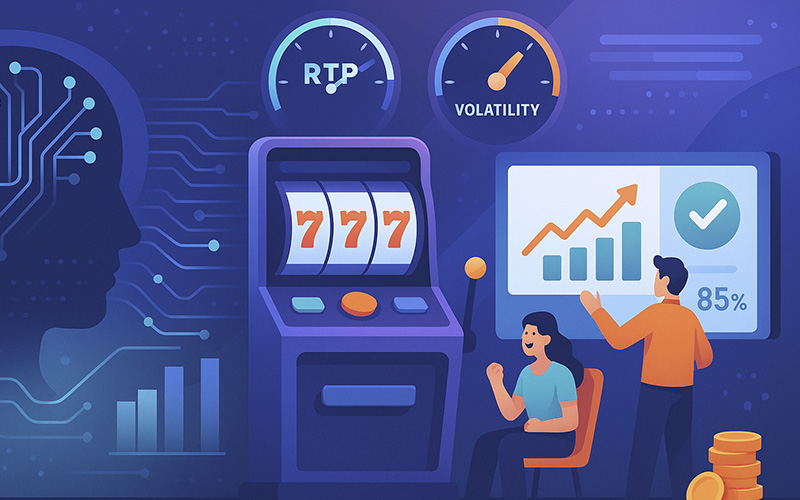
The 2025 experiment highlights a factor that extends beyond reel animation. Associations can develop through language, which means promotional and educational communication may influence how future outcomes are interpreted.
Operators should pay attention to several areas:
- Advertising creatives. Campaign materials need accurate descriptions of game events. A close-looking loss should never be presented as proof that the user is progressing towards a prize.
- New-player education. Onboarding can explain that unsuccessful combinations provide no information about the next random outcome. Simple wording can prevent mistaken expectations from forming early.
- Game explanations. Help content should make payout rules easy to understand. Clear probability information supports informed play and reduces confusion around visually dramatic events.
- CRM communication. Reactivation messages require particular care after unsuccessful sessions. References to approaching luck or a supposedly overdue win may encourage inaccurate beliefs about independent rounds.
The regulatory direction supports this cautious approach. UK Gambling Commission standards prohibit features that can reasonably mislead customers about the likelihood of particular outcomes. They also ban the substitution of one losing event with a false near-miss result.
The researchers behind the 2025 experiment discussed the loss association as a possible basis for interventions related to gambling harm. Their proposed direction therefore centres on the reduction of cue power.
The commercial appeal of the almost-trained condition is easy to understand. Directional attention increased by about 39%, while fixation duration grew by approximately 55%.
Those gains become problematic when a business deliberately teaches users to see losses as encouraging signals. Such framing may strengthen interest in an event that provides no additional chance of winning.
Previous evidence shows why caution matters. A large study involving 270 young adults found stronger autonomic reactions to near misses than to full misses and detected differences between the two positional subtypes.
Another EEG experiment with 23 participants found that before- and after-payline outcomes generated distinct neural patterns. These results reinforce the idea that visual proximity is psychologically meaningful even when the financial result stays at zero.
Responsible design therefore has a commercial role as well. Clear mechanics help protect customers, while accurate communication reduces regulatory exposure and supports long-term trust.
How Operators Should Approach Near-Miss Configuration
Businesses can apply the research through structured product review without the need to encourage loss-based persistence. The purpose should be to understand how specific mechanics affect users and identify potentially harmful patterns early.
Stages of the assessment:
- Map the main configurations. Record where important symbols appear and identify the moment at which the player knows the round has failed. Separate different sequences during the analysis.
- Review exposure across full sessions. Measure how frequently each pattern occurs during realistic gameplay. Several similar events in succession produces a different response from one isolated instance.
- Connect visual data with sentiment. Combine gaze information with satisfaction scores or voluntary continuation. A single metric cannot explain the emotional state behind increased screen attention.
- Audit surrounding communication. Check acquisition and onboarding materials for wording that links an unsuccessful result with future success. CRM campaigns deserve the same review.
- Include responsible gambling specialists. Behavioural experiments should undergo a harm assessment before broad deployment. Vulnerable segments need additional safeguards when persuasive mechanics are tested.
This framework gives operators a clearer view of what the feature actually does. It can also prevent attractive engagement figures from hiding a negative customer experience.
The Main Things About Near-Miss Psychology
Close-looking losses reveal how strongly perception can depend on presentation and learned meaning. The latest research provides useful product insight for operators, but its commercial interpretation requires clear limits.
The key points to remember:
- Different near-miss sequences can produce distinct reactions because the position of the decisive symbol changes how the outcome unfolds.
- Training participants to associate the event with a loss reduced directional attention by approximately 47%, while fixation duration fell by about 30%.
- Linking the same imagery with being close to success increased eye movements by around 39%, while gaze time rose by roughly 55%.
- The experiment involved 24 recreational gamblers under controlled conditions, so these percentages cannot be converted directly into expected retention results.
- Responsible communication should explain random outcomes accurately and avoid presenting visual proximity as evidence that a future payout is becoming more likely.
Near-miss research gives casino teams a better understanding of how reel presentation and previous associations interact during play. Used carefully, these findings can support clearer product testing and more responsible communication across the user journey.
Order a turnkey or White Label solution from Casino Market to launch a competitive gambling project with professional software and expert support.

Have questions or want to order services?
Contact our consultants:
- e-mail: manager@casino-market.com
- feedback form.
Check the information used to contact us carefully. It is necessary for your safety.
Fraudsters can use contacts that look like ours to scam customers. Therefore, we ask you to enter only the addresses that are indicated on our official website.
Be careful! Our team is not responsible for the activities of persons using similar contact details.