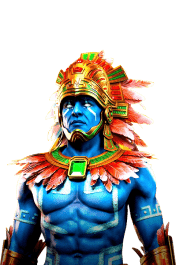
Mozambique’s new iGaming regulation opens the market to licensed operators. It imposes strict requirements concerning ownership structure, capital size, financial guarantees, payment processing, and data storage. Specific provisions address user protection and combatting illicit gambling brands.
Decree No. 61/2026, dated September 21st, established the rules for organising and conducting web games of luck. The regulations took effect on November 20th, 60 days after publication. Nevertheless, companies cannot yet offer services. First, they apply for concessions and licences, complete software certification, and secure other approvals.

Casino Market’s team studied national legal shifts to deliver key insights for operators. We offer consultations and practical help with entering jurisdictions, selecting tech solutions, and developing iGaming projects.
Businesses Eligible to Work in the Local Industry
Authorisation to organise internet gambling may be granted to public Ltd entities registered under the country’s laws. Notably, documents for digital operations are legally distinct from those for managing land-based casinos. Therefore, running a brick-and-mortar establishment does not open access to the iGaming market.
Key norms and requirements for working in Mozambique:
- Categories of applicants. The regulations identify 2 types. The 1st comprises brands already operating ground casinos in the state. The 2nd group is studios specialising in online entertainment services that meet the new rules.
- Ownership structure. If a company’s shareholders include legal entities, Mozambicans must hold 26% or more of its paid-up investment capital. This stake is preserved for the entire duration of the document. It may only be reduced with the prior consent of the oversight body.
- Minimum authorised budget. The sum must be MZN 100+ million (approximately USD 1.57 million). The regulator reserves the right to set a higher threshold.
Additionally, applicants must provide evidence of:
- the company’s financial stability;
- adherence to fiscal obligations and social-security requirements;
- sufficient funds to pay out winnings, cover ongoing expenses, and meet unforeseen liabilities.
Economic Guarantees and Contractual Contribution
The new framework establishes 2 initial payments totalling MZN 25 million (almost USD 395,000). Of these funds, MZN 15 million covers duties such as client accounts and possible charges. The remaining MZN 10 million yields the iGaming tax.
Key standards encompass the following:
- Approved channels. Operators can place the funds as bank deposits or provide an independent guarantee from a country-authorised financial institution.
- Obligatory audits. About half a year after project launch, Mozambique’s IGJ, an industry inspectorate, is required to review the amount and terms of the security. Further checks may be conducted subsequently if necessary.
- Contract-based contribution. The 2 liabilities are based on annual GGR, net of paid-out winnings. One finances responsibility, social, and similar initiatives, and another backs non-gambling-related tourism. Each is 2.5%, though the concession agreement may specify a higher percentage.
Regarding the latter, the framework explicitly clarifies that the 2 payments constitute contract-based duties of the operators. These are not classified as taxes or government levies.
Licensing and Authorised Gambling Products
Applications will be accepted by the body overseeing the tourism sector. Operators prepare documentation in Portuguese, using the prescribed format. If the original papers are in another language, they must be accompanied by a duly verified translation. An exemption can only be granted through the authority’s direct decision.
The application review procedure includes:
- obtaining an evaluation from the IGJ;
- checking compliance with regulations;
- auditing the company’s tech capabilities;
- exploring the operator’s financial resources.
The licence validity period depends on the business category: up to 3 years for operators of brick-and-mortar casinos in the country, and 2 years for other groups listed in Article 24. Document renewals are not automatic and depend on meeting established conditions. The concession agreement specifies their terms separately.
The regulations also define which entertainment types are permitted. The list includes:
- online slots;
- banca francesa (dice);
- lottery-style titles (keno, bingo);
- cards (baccarat, poker, blackjack);
- crash and other instant-win products;
- table games (American/French roulette).
Adding distinctive categories requires a separate ministerial authorisation. It may be granted after a specific assessment by the supervisor.
Domains, Payment Infrastructure, and Data Storage

To operate within the jurisdiction, companies must have their website addresses ending with .mz. They are also required to redirect all traffic originating within the country and from state-registered user accounts to an approved local platform.
Specific restrictions apply to financial transactions:
- Customer balances may only be topped up through e-services approved by the Banco de Moçambique.
- The only appropriate denomination is meticais. Foreign payment solutions or currency-conversion methods are not permitted.
- All transfers between consumers and the web casino are processed only using accounts held at country-authorised financial institutions.
Several rules apply to the handling of customer funds. For instance, upon a request, operators transfer any remaining assets to specified wallets within 48 hours. Additionally, the business must maintain sufficient funds equal to or more than the aggregate amount stored on all player accounts.
Location requirements extend to IT infrastructure. Solutions for customer entry, onboarding, and identification must be based within the state. All data related to iGaming activities are saved for a decade or longer.
Entrepreneurs are also required to:
- ensure 24/7 access to records for the IGJ;
- obtain certification for the employed software;
- undergo a tech audit annually or more often.
User Safety: Obligatory Limits and Self-Exclusion
The new regulations mandate the application of responsible gambling tools. Certain restrictions must be implemented no later than the customer registration stage.
Account activation requires setting limits on consumer deposits and wagers. Before gaming, users must set their own daily/weekly/monthly caps.
Changes to established max amounts are governed by specific rules:
- Bar reductions are applied instantly.
- Increases and other modifications come into force after 24 hours.
- Business tactics aimed at encouraging customers to raise the preset caps are considered illegal.
Participation in gambling is forbidden for minors (under 18). The algorithms must automatically verify a user’s age before completing onboarding.
Specific requirements apply to self-exclusion: customer requests take effect instantly and must remain in place for at least 3 months. A player may also contact the authority directly to block personal access to all platforms operated by local licensees.
Combating Illicit Gambling Websites: Measures
All iGaming projects targeting the national market are subject to the regulations, regardless of the owners’ citizenship or server location. If the IGJ’s monitors identify an unregistered brand, they will require the company to cease activities within 48 hours.
Non-compliance triggers notifications to the network. Telecom, internet-service, and other intermediary entities that receive such a message must implement blocking measures within the following 48 hours. The oversight body may set a different timeframe in certain cases.
A decision to restrict access includes 3 mandatory stages:
- Identifying a specific non-compliant platform.
- Providing evidence of violating established rules.
- Describing the legislative basis for banning the website.
Government’s Stance and Regional Cooperation
Broader plans for supervising the iGaming sector were discussed this autumn at the 17th GRAF, held in Maputo. At the conference’s opening, Mozambique’s secretary responsible for treasury-related aspects outlined the government’s position.
According to Amílcar Tivane’s speech, market growth must be accompanied by transparent rules and security measures. The expert said national authorities are striving for a state model that does not hinder activities but instead creates a transparent environment.
This format allows for the following:
- protecting residents;
- fostering fair business competition;
- directing the resulting benefits toward country development.
Another key topic at the forum was cooperation among supervisory bodies across nations. It was backed by Macário Gusse’s speech. The IGJ’s Deputy General Director and the GRAF’s VP urged national regulatory agencies to enter into an MoU. Such agreements facilitate information exchange and enable more effective action against illicit gambling.
The representative noted that confidentiality nuances can limit the sharing of data on licensees and the challenges encountered in oversight. In his view, formal interagency collaborations would help remove these obstacles.
Regulatory Gaps in the Introduced Framework
The new rules are being rolled out against the backdrop of declining casino tax revenue. According to the local Ministry of Finance’s report, the state collected MZN 161 million (around USD 2.54 million) in gambling fees during H1 2026. For the same period in 2025, that figure stood at MZN 175.2 million.
Meanwhile, the framework does not specify a particular fiscal rate for industry activities, referring instead to existing tax legislation. Licence and concession levies are likewise determined by other regulations and the terms of individual contracts.
Certain practical aspects of the market launch also remain unclear. While the decree outlines processing applications, a start date for accepting requests is not specified. No timeline for the segment launch was officially announced either.
Consequently, although the framework has already taken effect, the sector has not been automatically opened to operators. The actual dates will depend on the authorities’ readiness to process applications, the completion of required stakeholder checks, and securing software approvals.
The Main Things About iGaming Oversight in Mozambique

The new regulations set norms for running gambling platforms in the country. They also impose stringent financial and tech obligations on companies looking to work in the national market.
When evaluating the prospects of serving Mozambique’s audience, prospective entrants should consider several factors:
- Significant initial investment. The minimum-budget threshold stands at MZN 100 million, and the guarantee requirement is MZN 25 million. Additionally, 2 contractual levies are set at 2.5% of annual GGR.
- Strict operational conditions. Licensees need a national domain, meticais- denominated casino payment systems, and locally hosted infrastructure. Gaming data is saved for 10+ years. Customer age identification and deposit/bet limits are implemented before registration.
- Unknown timeline for a commercial launch. While the regulations have already taken effect, the date for accepting requests and the rollout schedule for licensed platforms have yet to be determined.
Our team supports iGaming projects at every stage, from launch to ongoing development and scaling. We streamline opening a gambling business in Africa and beyond by evaluating jurisdiction requirements, selecting software, integrating payment gateways, and incorporating content libraries.
Feel free to contact us for in-depth consultations and practical aid. Our range of services and products is constantly expanding.
Have questions or want to order services?
Contact our consultants:
- e-mail: manager@casino-market.com
- feedback form.
Check the information used to contact us carefully. It is necessary for your safety.
Fraudsters can use contacts that look like ours to scam customers. Therefore, we ask you to enter only the addresses that are indicated on our official website.
Be careful! Our team is not responsible for the activities of persons using similar contact details.