iGB has published new market intelligence research in collaboration with GR8_TECH. The report explores players’ shifting gaming habits, describes the impact of new technologies, and identifies the innovations driving the next era of online casinos.
The document leads readers through various fields of the industry. It scopes cutting-edge content features, demographic changes, the growing importance of AI-based modules, personalisation services, and many other aspects.

Casino Market’s team has reviewed the study to summarise the main insights into the current state of the gambling industry. We consult entrepreneurs on opening iGaming projects and provide practical assistance and tools.
General Tendencies Related to Online Experiences
Global societal changes, combined with rapidly evolving technologies, directly affect customer preferences and business strategies. Although there have been no dramatic changes in recent years, the market is experiencing a slow yet steady shift in user interests and in methods of meeting them.
The early drift began with the spread of smartphone penetration. While the 1st such gadgets were introduced decades ago, some regions still lack direct access to them. With increasingly broad adoption of these devices, new consumer hubs continue to emerge globally. To succeed, industry companies must quickly react to these changes.
General trends that the market is witnessing now:
- Entertainment at the forefront. Monetary value and risk-related excitement remain valuable to gamblers. Nevertheless, the amusement factor becomes progressively significant, outshining simple cash hunting.
- Intensified competition with other spheres. Other digital entertainment verticals are now more accessible to clients as well. Such a nuance creates an element of rivalry with these segments, as their representatives target similar audiences.
- Shorter attention intervals. People no longer set aside dedicated periods of time for iGaming. Instead, they want to enjoy it on the go or in short-term situations, such as waiting in line or for a cab. Many prefer engagement that can be combined with other content consumption, like spinning slots while watching a TV series.
- More thoughtful strategies. Welcome bonuses and huge-win promises alone are not enough for a modern player. Platforms must have quick attention hooks to attract and retain users. Learning curves for newcomers need to be gentle but not overly detailed, monotonous, or too long (dozens of steps).
Gamification tools, personalised offers, and community engagement continue to gain momentum. At the same time, general approaches will hardly be enough here. For instance, some players may enjoy high-interaction social opportunities in content, while others find them rather distracting and obtrusive.
Crash gambling is an illustrative example of thoughtful trend implementation. They are based on a simple mechanic, enhanced by gamified, customisable, and social elements. Further development brought additional innovations. For instance, casino enthusiasts can now access more transparent solutions and feel in control of sessions.
At the same time, industry experts doubt the next hype wave will come from this direction. The sector is experiencing slower growth, which suggests it is reaching its niche. New trends will likely centre on emerging segments or those where noticeable refreshes are possible. AI, ML, and experiences from other industries will foster these tendencies.
How Businesses Can Meet New Customer Preferences
While accessing potential players is now much easier, retaining them remains a challenge. Web gambling offers are increasingly perceived in the same way as other entertainment formats. While this factor helps break down negative social stereotypes, it also makes competition fiercer and attention more fragmented.
Matthias Ciappara, LeoVegas’ Head of Product, Gaming Experience, notes that most audience expectations will soon come from other amusement industries. When a person surveys a phone, multiple distractions can grab their attention. He believes online casinos compete for ‘disposable entertainment time.’
Operators strive to interest users in an environment with numerous alternatives:
- YouTube videos;
- TikTok live streams;
- games from app stores;
- Netflix subscriptions, etc.
Thus, the market needs next-gen content that can retain gamblers when their focus is split or when distractions pop up. LeoVegas’ team discovered that the audience has become excited about products with very low and extremely high interaction rates. These opposed categories serve different needs — simultaneous game engagement and short, fast-paced action to kill a few minutes.
It is essential to have content from both sections to cover diverse requirements. At the same time, rolling out a scope of slots is far from enough. Personalised, customised experiences are a must-have.
Lusine Khudaverdyan, GR8_TECH’s Head of Casino, claims that AI is helpful here. Focus intervals are shorter, so modern developments must include a hook to capture customer attention instantly.
The company researched what gamification tools help retain clients while optimising budgets for loyalty strategies:
- quests — 52.9%;
- stickers — 27.3%;
- achievements — 15.2%;
- tournaments — 4.6%.
For now, the balance between financial risk and gain distinguishes gambling from other forms of amusement, yet this gap is closing. For instance, some traders offer iGaming-style services, so casinos should also prioritise entertainment over monetary value to grab a slice of this pie.
Software development will hardly be the only area of application. The trend will spread across player segmentation, advertising, risk estimation, and many other fields.
Evolution of Consumer Tastes: Innovation for Need Coverage

Previously, users took 1 conscious action, such as attending a gambling club or registering on a casino website on desktop, to spend a relatively long time on entertainment. Now, the variety of portable devices makes iGaming more accessible but pushes it into competition for each second of audience attention.
Mr Ciappara is sure that the gadgets and the way customers play substantially impact their expectations. Therefore, businesses need to adapt quickly and manufacture even more exciting and engaging products.
Guga Gotsadze, SmartSoft’s CEO, adds that this tendency has led to the emergence of new content types featuring greater personalisation, gamification, and socialisation. He admits consumers still want experience wins and the sense of triumph which make gambling stand out.
Yet the industry has to compete with many other entertainment offers:
- mobile games;
- stock applications;
- crypto-supported websites;
- streaming services, and many more.
Enhanced Interaction: Rising Need That Cannot Be Ignored
Crash content became a good example of how increased socialisation can bring success. The genre builds on the core excitement from risk while integrating gamified and other engaging elements.
Ms Khudaverdyan emphasises the effectiveness of interactive tools. For instance, “rain” makes random free wagers drop into the multiplayer chat. Even if a user does not participate in the session directly, they still feel involved in the process and could follow the trigger.
Social components are not new to the market. They have been in real-dealer products for a long time, but adding these features to other game categories yielded equally great results. It is not only about crash titles: the Gates of Olympus slot was enhanced with live-content benefits, making it similar to a show.
As the audience increasingly wants more interaction, providers have begun incorporating both general and side chats across many genres. An important nuance is that newer gamblers are excited by many social features, but seasoned and loyal groups find them distracting because they have particular preferences.
Experimentation as the Only Entrance for Innovative Concepts
With growing demand for opposite extra- and low-interactive games, it may seem that products in the middle of this curve fall out. Nevertheless, it is not necessarily the issue.
Developers of slots with both dynamic and passive elements are learning how to integrate innovations from the experience in other amusement categories. For instance, 99 Royale offers reels in a multiplayer format. Such experiments drive product differentiation.
Implementing any technology without proper thinking is not enough. It is important to ensure an understandable UX through:
- short learning stages;
- purpose-focused gamification;
- prioritised entertainment quality, etc.
A significant part of these features can be discovered and efficiently incorporated only via tests, with businesses accepting the risk of failure. Companies cannot automatically dig up this information, so continuing to learn and innovate even after losses is key.
To address changing user tastes and habits, the market requires a broader range of new solutions. Such variety enables developers and operators to serve a growing pool of clients’ motivation triggers, fields of interest, and desires.
Studios with 1-size-fits-all strategies will struggle to make it, as customers differ not only in personality but also in mood by time of day, year, etc. Demand is rising for highly adaptable software. The segment has already begun to adopt this trend: in Q1 2026, the average number of new casino releases reached 300/month, while in Q2, the figure climbed to 400.
Why the Next Trend Is Likely to Emerge Outside Crash Games
This vertical was the 1st to demonstrate how alternative genres could succeed. Over the 5 prosperous years, the category saw impressive demand, and the majority of providers added several niche products to their portfolios, resulting in over 500 titles across the market. Now, this upward trajectory seems to come to an end. New titles are more copycats than brand-new hits.
Therefore, many experts believe the next evolution lies beyond the crash sector. Mr Gotsadze sees RNG-based entertainment, except for slots, as the next runway for success. Ms Khudaverdyan identifies PvP as a promising field, providing a strong foundation for integrating innovative ideas that align perfectly with ever-evolving user tastes.
Key peculiarities of the segment:
- Familiar concept. With the emergence of diverse entertainment options, gamblers have less time to dive into new rules. Player-vs-player formats can attract not only casino enthusiasts but also fans of other amusements, such as shooters, board games, etc. A shorter learning stage is a strong benefit.
- High interactivity. Competing with real people around the world, engaging with friends, commenting on sessions in chat, and similar social features enhance the experience.
- Slower pace. Since opponents are humans rather than algorithms, it takes more time to find a companion for the round. This nuance can make PVP a niche instead of granting the genre global appeal among the casino audience.
Games with Real Dealers: Promising Environment for a Big Hit
For Mr Ciappara, the live casino sector is the next breakthrough holder. This content is already advantageous for many customers due to its interactivity and shapes one of the largest gambling verticals. Participants can dynamically plunge into communication or remain silent watchers. In either case, the category makes punters feel less lonely in contrast with 1-player alternatives.
This aspect is hard to underestimate. Therefore, other segments also adopt this trend: bookmakers integrate community wagers, and other operators collaborate with streamers. While sharing entertainment time with others, clients can remain anonymous, affording them more freedom of behaviour.
Still, real-dealer titles require further innovation and twists to transform into new hyping gems. Mr Gotsadze notes that developers have already begun combining live and digital elements in their releases.
Roulette is one of the most illustrative examples, where providers experiment with:
- integrating computer-generated imagery;
- creating a full-fledged artificial environment;
- adding virtual wheels alongside physical ones.
The expert also underscores the importance of a human touch. While technologies open new horizons for innovative development, it is a real host who enhances entertainment and the sense of presence.
Marat Koss, Playtech’s Chief Interactive Gaming Officer, highlights the role of live dealers as experience definers. Chats, dynamic engagement, and croupiers’ personalities make sessions unpredictable and prevent them from becoming boring.
Gambling shows are a prime example of this approach. They are not tied to a single mechanic. Developers incorporate large wheels, lottery machines, plinko walls, and other elements, both digital and physical.
Whatever category gives rise to the next breakthrough, this hit will likely emerge at the intersection of multiple genres, borrowing features and concepts from across them. Mr Ciappara believes that the better the industry understands engagement triggers of top products, the more all verticals develop together.
iGaming Demographics: Worldwide Shifting Markers

Generally, web casino audiences are becoming younger and more global, while evolving constantly. A technology boom plays a massive role in this context. New breakthroughs broaden a pool of potential customers, while the spread of older solutions also impacts this expansion.
Africa is a great example, as local smartphone penetration rates continue to rise, enabling people who were previously without the Internet to try digital gambling for the 1st time. Such a factor drives the demographics to be younger, matching the continental populations. The age gap between new generations of online punters and older ground casino-goers is growing.
Importance of Granular Strategies for Audience Analysis
Previously, many providers treated customers from specific regions as a single cohort. Now, such an approach is ineffective and even harmful for businesses. Users from the same country’s states may behave dramatically differently, so when it comes to large territories, like Asia or Latin America, detailed segmentation is especially needed.
Age is one of the main markers:
- Overall, older players tend more to slots.
- New-gen fans demonstrate diversified tastes.
- Generally, the digital audience is becoming younger.
- VIPs and seasoned gamblers are more consistent, or even increase in age.
To attract and retain all solvent categories, entrepreneurs must adopt a thoughtful, personalised approach that focuses on more than just how old website visitors are. For instance, loyal, long-standing clients are well aware of most mechanics on the platform and respond only to retention, whereas newcomers need to learn the rules almost from scratch.
Expectations of Different Demographic Groups
Age also affects the methods companies utilise to capture attention, attract gamers to the portal, and keep them interested. The number of people who approach web entertainment without experience with land-based counterparts is growing rapidly. Mr Gotsadze believes this factor radically changes tastes and response strategies.
For instance, a young adult trying iGaming for the 1st time may prefer faster rounds because of previously played non-gambling content. Whereas a 50-year-old person with visits to physical casinos in the past would prefer a slower pace.
Ms Khudaverdyan shares this opinion, adding that newer audiences often choose easier products to enjoy 1st. Therefore, they more often try crash titles, falling for quick sessions and an enhanced sense of control.
She also emphasises that businesses should regularly review their approaches, as clients constantly change, requiring timely adaptation. In a decade, the same audience may become another segment that generates more profits, and companies that previously refused to serve will lose this sector. Catering to the needs now, even with lower acquisition ROI, is an investment in the future.
Mr Ciappara continues this line of thought, noting that blackjack was favoured by people aged 25–34 in the past. Now, the same individuals are part of another demographic group. Those who take the vacant place have tastes distinctive from those of their predecessors.
Age-Based Categories in Figures: Regional Preferences
GR8_TECH’s team analysed audiences worldwide to present key numbers. This research lasted from December 2025 until May 2026.
Percentages of young gamers who prefer slot, instant-win, and live-dealer titles, respectively:
- Africa and Middle East — 64.6%, 26.6%, and 4.2%;
- Canada and Australia — 51.7%, 26.2%, and 20%;
- Latin America — 62.1%, 23.3%, and 14%;
- Europe — 55.4%, 23.3%, and 16.7%;
- CIS — 65.1%, 17.8%, and 12.8%;
- Asia — 23%, 49.6%, and 25.1%.
Compare these figures with those of older audiences:
- Africa and Middle East — 80.6%, 13%, and 4.5%;
- Canada and Australia — 85.8%, 8.6%, and 4.5%;
- Latin America — 74%, 16.7%, and 8%;
- Europe — 74%, 16.7%, and 6.5%;
- CIS — 84.8%, 8.2%, and 4.4%;
- Asia — 44%, 29.7%, and 23.6%.
Significance of Other Markers in Player Analysis
Financial possibilities and technological affinity are among the most informative characteristics:
- Next-gen gamblers typically have less stable earnings than older ones. Nevertheless, this trend will hardly be linear.
- The income of younger adults without spouses and children is often more disposable than that of those with families.
- Social, political, economic, and other uncertainties (e.g., too high petrol prices) impact how people perceive amusement.
- More tech-savvy groups will likely be interested in alternative forms of digital entertainment, including prediction platforms, cryptocurrencies, and stock trading.
Markets like event contracts are experiencing impressive growth, which is affecting iGaming. Simultaneously, this emerging sector lacks adequate protections, particularly regarding responsible play, as many bettors view such websites as non-gambling. Mr Ciappara believes that this situation negatively impacts internet casinos.
Mr Gotsadze adds crypto platforms and non-trading stocks (stakes on price rises/falls) to the list. He is sure that audiences for such portals who decide to try iGaming are more informed and discerning about technology.
Ms Khudaverdyan summarises that these demographic markers will be crucial in retention, not only acquisition. Generally, newer participants will likely be more friendly to experiments and fresh game formats, while long-time clients will hardly be fond of innovative PvP propositions.
AI and ML in Internet Content Development and Beyond
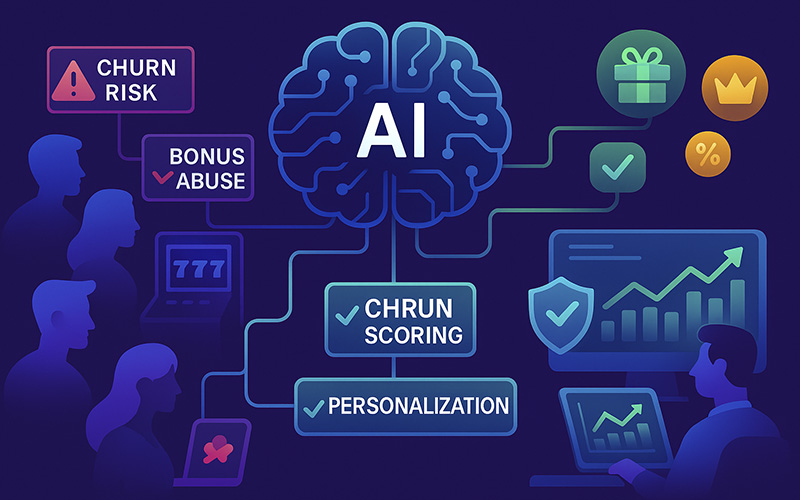
Artificial intelligence helps lower the barriers to entry for software development, thereby enhancing industry competition and fostering innovative solutions. After the initial manufacturing stage, the technology also assists in fields involving large volumes of data.
These areas comprise:
- CMR;
- risk analysis;
- personalisation;
- responsible gambling;
- bonus programs, and others.
Cost-Effective Content Design Using Artificial Tools
Generative modules reduce testing and decision-making expenses for providers, lowering end-product prices for operators. Mr Gotsadze continues this line of benefits with the ability to handle larger workloads with the same resources, including human ones. Additionally, technological analysis helps improve game quality.
While AI will allow for the coverage of more tasks, Mr Ciappara does not believe it will lead to job losses in development departments. He thinks that innovative tools would rather shift staff’s workload from information processing and active programming to creative tasks and validation.
The specialist emphasises that crafting products cannot be conducted in isolation. Artificial tools must be backed up by human personnel. If not, suppliers risk receiving “mechanical” content that is irrelevant, confusing, or boring for players. Since the goal is always a high-quality UX, real people must validate algorithm-generated results.
Technology in Visual Design and Presentation
A human touch is also irreplaceable in terms of graphics, thematic narratives, and overall authenticity. Often, gamblers can distinguish solutions created by real people from those developed by generative services, and this nuance affects their attitude. AI may shape a general look, but only a human can implement the feel.
Technology will continue to evolve, bringing both new benefits and some pitfalls. Sensible management and balance between these 2 sides are necessary.
The increasing adoption of artificial tools raises a question: How can products be differentiated amid numerous AI-powered releases from hundreds of companies? Mr Ciappara assumes that the era in which better offers define leaders is slowly coming to an end. Instead, elevated experience could appear at the forefront. The next competition marker is likely innovation.
Generative Modules in Other Related Fields
Lobby presentation is another area where artificial solutions can be helpful. They analyse engagement features and deliver relevant suggestions to gamblers. In terms of forming recommendations and segmenting audiences, innovative programs help understand customers and deliver an experience that is tailored accordingly.
Ms Khudaverdyan claims that personalised lobbies have demonstrated results so significant that businesses have begun implementing a similar approach within games themselves. For instance, some integrate sliding sidebars that feature AI-generated content recommendations of titles with analogous elements. This detail influences retention.
Other fields and trends related to artificial services:
- Enhancing CRM and bonus initiatives. So far, this tendency is not that widespread, yet it boasts promising potential. For instance, operators can use technology to select the most profitable slots for a particular campaign. Algorithms will analyse information and list options with the highest margin.
- Experimenting at the core. Generative modules are still in the early stages of their evolution in many respects. Although the future looks rather inspiring, most tasks involving these tools require testing. Only after scrutinising the results can companies scale confidently. Learning player reactions and preferences is vital for making effective decisions.
- Handling large volumes of data. Even a big analytics team cannot keep up with the pace of AI processing. Internet casinos benefit from expanding the scope of technology implementation beyond initial early-stage risk management and market segmentation.
- Fostering responsible gaming. Artificial components can prevent certain issues and advance UX. They can be used to detect gamblers with the emerging signs of risky behaviour and to automatically and quickly correct their journeys.
VR/AR Casino Entertainment: Reasons for Ceasing Hype
Previously, solutions with virtual and artificial components, together with wearables, were a hot topic in industry discussions and drew careful investment. Nevertheless, after several years of being on everyone’s lips, the segment failed to deliver significant results.
Products similar to Pokémon GO were hits back then. At the same time, no other systems have gained such momentum, and some have fallen short of experts’ predictions and audience expectations. Now, a large part of the community believes these technologies will have little effect on iGaming.
Challenges that Restrict Further Sector Development
Among the most noticeable factors are the following:
- Insufficient penetration rates. Players have been adopting the offers too slowly. The vertical needs to reach at least 60% of audience acceptance to become a truly valuable trend. Instead, it remains niche and engages only particular demographics.
- High equipment costs. Despite some price fluctuations, the systems are still too expensive for most casino enthusiasts. At the same time, the existing market products are controlled by several corporations, limiting innovation in the field.
- Mismatch with realities. Modern gamblers increasingly prefer short-session activities and agility. The need to dedicate a rather long period to distracting oneself from other tasks, taking on gear, and immersing in the action makes VR/AR feel like a throwback.
Mr Ciappara is confident that modern digital casinos do not require virtual, augmented, or wearable solutions to continue developing. Some studios have tried to implement gamified elements, such as integrating P2P betting networks for wagers on exercise goals. Nevertheless, it turned out that the system can be easily cheated and had issues related to responsible gambling.
The expert believes that, eventually, the market will see this technology applied in online casinos, but it will likely remain niche. Even before that, challenges should be addressed 1st.
Positive Outlook on Virtual and Augmented Tools
Some specialists still see potential in the sector. For instance, Mr Gotsadze suggests that some innovative, advanced ideas may emerge here. If they expand the boundaries, content diversity, and user experience, further prospects would be positive.
Ms Khudaverdyan agrees on this point, emphasising the major benefit of VR/AR — its ability to realistically mimic the atmosphere of land-based casinos. She adds that such innovations would allow for attracting the punters who have never visited physical halls. However, the expert admits that it is too early to discuss the adoption scenarios and effects of these tools.
The Main Things About Trends in Next-Gen Online Casinos

The market is entering a stage where capturing and retaining attention is becoming as important as offering a broad content portfolio. Players’ habits continue to evolve, so operators have to rethink what makes an experience relevant and competitive.
iGB’s report highlights several developments shaping this shift:
- Entertainment takes priority. Modern gamblers expect fast, engaging sessions that stand out from other forms of digital leisure and yield limited attention spans.
- Personalisation becomes essential. Different users prefer distinctive levels of interaction. Thus, tailored content and granular segmentation are more effective than 1-size-fits-all approaches.
- New formats gain momentum. PvP and live-dealer products are viewed as promising areas, while crash games appear to be approaching market saturation.
- AI expands its role. Artificial intelligence can support personalisation, CRM, risk analysis, content creation, and responsible gambling, but human validation remains crucial.
- Demographics are shifting. Younger audiences show more diverse preferences and are increasingly entering iGaming without experience of land-based casinos.
- VR/AR loses its hype. High costs, limited adoption, and poor alignment with short-session habits keep virtual and augmented products largely niche.
Ultimately, adaptability and experimentation are the main conditions for meeting changing player expectations. They are the key to discovering the next successful iGaming formats.
To learn more and launch a next-gen online casino with professional support, feel free to contact us. We offer a broad range of services, from turnkey development and software integration to licensing assistance and geographic/niche expansion.

Have questions or want to order services?
Contact our consultants:
- e-mail: manager@casino-market.com
- feedback form.
Check the information used to contact us carefully. It is necessary for your safety.
Fraudsters can use contacts that look like ours to scam customers. Therefore, we ask you to enter only the addresses that are indicated on our official website.
Be careful! Our team is not responsible for the activities of persons using similar contact details.