Adding a new product is easier to justify when it fits an audience that the company already serves. For a casino owner, familiar sports content can make a fresh format seem like a small extension. The work behind that addition can be much larger. Event-based trading is a great recent example. The format requires a clear plan for what customers can buy and how each result will be confirmed.
Prediction markets bring this challenge into focus. The first task is to decide whether the proposed service fits the chosen country. From there, the operator can assess the resources needed to support it. A careful review can also reveal where expansion should stop.
The Casino Market team connects commercial potential with the relevant choices that make a launch workable. Order turnkey or White Label solutions for your chosen region and ensure the product range suits the audience and your business plan.
What Changes When Customers Trade Outcomes

A basic contract pays a fixed amount when a stated condition is met. Participants take a yes or no position, and the payout depends on the final result. For example, a $0.30 contract pays $1 if the forecast is correct. The possible gain is $0.70, but an incorrect forecast returns nothing.
In conventional betting, a bookmaker quotes odds and accepts the stake. Meanwhile, exchange users submit orders that meet offers from other participants. Prices move as buying and selling activity changes. A trader can also exit a position before the event ends. That requires a matching order at an acceptable value. Early sales may produce a profit or a loss.
For an operator, this means explaining a different kind of service. Visitors need clear information about the amount they could lose. Help pages should also describe how a payout is calculated. The chosen topic affects what verification is needed behind the scenes. A published economic figure raises different verification issues from a football score. Every question needs its own definition of a valid answer.
The written rules should identify the exact announcement used to confirm the outcome. For an interest-rate decision, that could mean the central bank’s statement after a specified meeting.
This is why building a broader catalogue starts with checking suitability. Copying a popular category from another site leaves unresolved questions about its legal status. The team must assess whether it can run the proposed activity in the intended location.
How to Find the Relevant Share of Demand
The headline figures show why this sector attracts attention. Commercial forecasts still need a clear distinction between trading activity and income. Pew’s analysis uses notional taker volume. Under this measure, each contract counts at its potential $1 payout, even when the buyer spends less.
Relevant data of the format:
- Overall scale. Combined monthly turnover on Kalshi and international Polymarket grew from below $5 billion in September 2025 to around $24 billion in April 2026. Such expansion demonstrates substantial customer interest.
- Category balance. Sports-related activity represented 80% of Kalshi’s cumulative volume and 39% of international Polymarket’s from July 2024 to early May 2026. This implies that catalogue restriction could affect the platforms very differently.
- Geographical differences. Polymarket US recorded about $1.3 billion in April 2026, compared with $9 billion for its international business. Those operations need separate treatment when assessing a potential destination.
These statistics describe completed trades. They leave separate questions about the fees an operator could earn and the cost of delivering the service.
The useful next step is to estimate demand for the subjects allowed in a target country. A forecast based on global totals can overstate the opportunity available to a smaller entrant. Budget planning should also allow for quiet periods. A large historical figure gives limited guidance on whether a particular contract will attract enough buyers and sellers.
An operator can start by checking interest in a small approved selection. The results can then guide further investment, with room to stop if participation remains weak. After that, operators can estimate income from expected fees on supported activity. That amount can be compared with the costs of compliance and daily operation before approving a larger marketing budget.
Why Subject Fairness Needs Testing
Different topics create distinct opportunities for abuse. A reliable service must examine who could benefit from private knowledge. Settlement also needs attention, because it determines the final payment.
Before adding a category, it is important to check these key points:
Identify Privileged Information
Employees may see company figures ahead of publication. The commercial risk starts when that information becomes useful for a bet. In May 2026, Google engineer Michele Spagnuolo faced criminal charges over alleged use of confidential employer data on Polymarket. Guilt still needs to be proven in court.
An operator should assess possible insider access before adding related outcomes. Staff policies should explain when personal involvement makes participation unacceptable. Review responsibility must be assigned before a question is published.
Check for Participant Influence
Some individuals can directly determine whether a stated condition happens. George Santos settled with the CFTC, a US financial regulator, in July 2026 over positions on his State of the Union attendance. The agreement included a three-year trading ban, without Santos admitting to the findings.
This indicates that operators have to identify anyone able to control the outcome before allowing participation.
Examine the Evidence Source
The final answer may depend on a single external measurement. In April 2026, a police complaint followed unusual temperature spikes at Charles de Gaulle Airport in Paris. Associated Polymarket contracts drew on data from that location, with suspected tampering under investigation.
The operator’s task is to check whether the reference record can be trusted. A backup plan should cover interruptions or disputed results. Define what happens when the usual feed is unavailable, including who can authorise an alternative.
How to Choose the Legal Model for Your Destination

Technology alone does not answer which permission route applies. The activity behind a contract determines which rules apply. That is why operators should review the intended offer before they approve a development budget.
Approaches that illustrate the key decisions:
Eligibility within Financial Frameworks
In Canada, two investment dealers can handle a specific set of event contracts. The initial range includes forecasts on economic or environmental conditions. At purchase, at least 30 days must remain until the scheduled end.
Canada’s investment industry regulator, CIRO, excludes sports or entertainment contracts from dealer approval under guidance issued on 27 August 2026. The existing authorisations cover a tightly defined offer.
Customers used to same-day football results need a clear explanation of positions that may remain open for several weeks. The interface should also distinguish the final payout date from any opportunity for an earlier sale.
Brazil draws its boundary around the underlying reference point. Resolution CMN 5.298/2026 excludes sporting or political events from the permitted derivatives framework. Eligible benchmarks include interest rates or currency prices, subject to applicable requirements. The restrictions also reach relevant foreign instruments offered in the country. That is why an offshore arrangement requires the same scrutiny of the proposed subjects.
A bookmaker that considers this route would need a substantially different catalogue. The legal assessment must establish which subjects are available before customer demand can justify development.
Domestic Restrictions and Disputed Oversight
EU rules can bar retail sales of qualifying financial contracts with a fixed payment or zero at expiry. National gambling laws may also apply, depending on the underlying subject. The label given to the format does little to resolve its classification.
In the US, federal supervision has prompted repeated challenges from states. The CFTC began proceedings that involved several jurisdictions in April 2026. An August court decision allowed Utah to enforce its gambling laws against Kalshi’s sports contracts.
The most important step is to keep reviewing what applies in each location. A launch team should account for applicable judgements when they decide who can receive the service.
Dedicated Authorisation Route
Gibraltar introduced specific rules for this activity in July 2026. These measures were adopted under the Gambling Act 2025. For a prospective applicant, this creates a local framework to investigate. Any overseas launch still needs its own review of customer access.
These examples show why one international brand may require different arrangements across its destinations. The associated restrictions should be clear before a supplier begins work. A signed technology agreement cannot settle an unresolved licensing question.
How to Make Partnerships Work within Distribution Limits
Recognition can bring visitors to a site. Converting that attention into lawful participation requires a clear view of where the advertised offer is available.
FIFA appointed ADI Predictstreet as its official prediction-market partner for the 2026 World Cup. The arrangement illustrates how closely the format now intersects with major competitions.
Commercial rights still need a territorial check. Sports bodies need to confirm local permission before they enter major sponsorship deals. An operator’s promotion plans should reflect the countries where customers can actually use the service. Enforcement can also remove the route between an advertisement and its target page.
On 16 July 2026, the French gambling authority ordered internet providers to block Polymarket. Earlier geographical controls had proved insufficient to prevent transactions from restricted territory.
Mobile availability deserves a separate review. In Argentina, a March 2026 court order covered removal or restriction of related apps through Google and Apple. That widened the operational impact beyond the website itself. These examples point to a solid budgeting rule. Campaign spend should only follow once it is confirmed that the promoted activity can reach its intended users.
Before you opt to buy traffic, check the full path from the promotional message to registration. Agree in advance how paused categories will be handled by external promoters. Marketing teams also need an assigned contact for urgent changes. A new restriction may require a fast update to affiliate instructions or paid advertisements. The same planning should cover visitors who arrive from existing brand channels. An audience already familiar with the business still needs a clear explanation of local availability.
How to Translate Findings into Platform Requirements
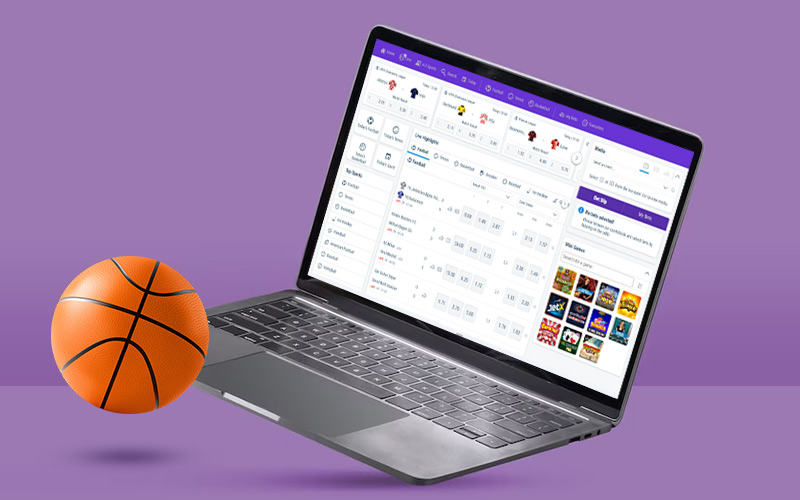
A shared interface can still present different offers to people in distinct places. DraftKings integrated DKeX into its combined application in June 2026. Access to sportsbook products or event contracts depended on the customer’s location. That example turns geographical planning into a software specification. Buyers need to see what staff can configure before they make a commitment.
The supplier review should cover key capabilities:
- Catalogue control. Administrators should be able to limit displayed categories by destination. A demonstration needs to show how an excluded topic disappears from the relevant customer journey.
- Eligibility checks. Account access should reflect the conditions of the applicable licence. Testing needs to establish how users from an unapproved territory are handled.
- Contract records. Store the terms that applied when a position was opened. Support staff should be able to trace later amendments and keep the earlier version.
- Restriction handling. Name the person responsible for acting on a regulatory notice. The technical team and marketing staff need an agreed process for coordinated updates.
These are requirements to verify with a proposed provider. A polished demonstration has limited value if the requested territorial controls remain unproven. Test both public pages and the actions that a restricted account can attempt. The demonstration should cover a rejected transaction, plus the message shown to the visitor.
The agreement should clearly separate ordinary casino software from any work needed for an exchange. Each party should understand which services are included and who remains accountable for ongoing operation. Removing a category from the lobby should leave clear instructions for any existing positions. The operations team needs to understand which settlement rules still apply.
A manageable starting scope can help a smaller company test its procedures. Further categories should enter the offer only after the necessary checks are complete.
The Main Things about Prediction Market Expansion
Growth in this sector creates genuine commercial questions for gambling brands. The answer depends on the offer that can be lawfully delivered to a chosen audience. Careful preparation connects potential income with the work required to support participation.
Key conclusions to keep in mind:
- Demand forecasts become more useful when they focus on eligible categories in a clearly defined territory.
- Fair access requires checks for privileged knowledge and protection against manipulation of the underlying event.
- Legal classification must be reviewed for each proposed product before the launch budget is approved.
- Sports sponsorships create exposure, while campaign planning must reflect where the advertised activity is permitted.
- Shared technology supports expansion when staff can apply local restrictions and keep an accurate record of changes.
Bookmaking experience can help with the commercial assessment, but each additional format brings its own obligations. A small starting range lets the team test the service before they spend on further development.
Order the suitable software or buy a turnkey solution at Casino Market to plan the next stage of your gambling business.

Have questions or want to order services?
Contact our consultants:
- e-mail: manager@casino-market.com
- feedback form.
Check the information used to contact us carefully. It is necessary for your safety.
Fraudsters can use contacts that look like ours to scam customers. Therefore, we ask you to enter only the addresses that are indicated on our official website.
Be careful! Our team is not responsible for the activities of persons using similar contact details.