Casino Market experts explain how operators struggle against the creation of various profiles and why the success of entertainment portals depends on it.
About the Concept
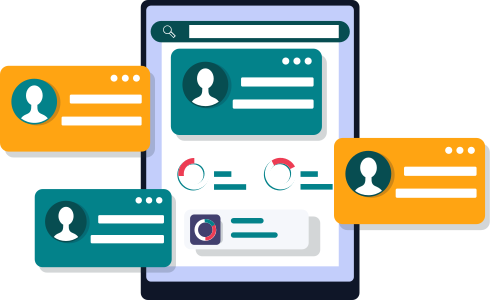

Common Objectives Include:
- claiming welcome offers repeatedly
- bypassing platform limits
- returning after a ban
- hiding payment activity
- supporting organized fraud schemes
Common Abuse Scenarios

Repeated Welcome Offers
- new email addresses and SIM cards
- altered personal information
- VPNs, proxies, and additional devices

Bonus Abuse
- mass account registration
- repeated bonus claims
- low-risk wagering strategies
- withdrawals after meeting minimum requirements

Limit Evasion
- deposit and betting limits
- active bonus restrictions
- tournament participation
- Responsible Gambling controls

Ban Evasion
- new contact details
- identity manipulation
- anti-detect tools
- changes to network infrastructure
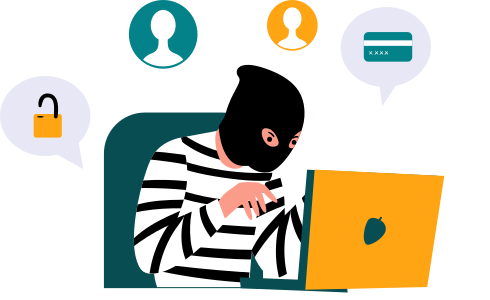
Organized Fraud
Large Fraud Groups May Control Thousands of Profiles Using:
- anti-detect browsers
- virtual machines
- automated registration tools
- device and SIM farms
- databases of personal information
- specialized management software
Risks for Operators

Financial Losses
- duplicate bonus payments
- cashback abuse
- unjustified promotional payouts

Higher CAC
- acquisition budgets fund existing players
- campaign performance becomes misleading

Distorted Analytics
- Conversion Rate
- Retention Rate
- ARPU
- LTV
- channel and bonus performance

Operational Costs
- more manual investigations
- additional workload for KYC, AML, finance, and support teams

Compliance Exposure
- identity verification evasion
- limit circumvention
- concealment of fund origins
- fines, restrictions, or license loss
How Operators Detect Linked Accounts
Personal Data Checks
- identity documents
- addresses
- phone numbers
- dates of birth
- banking details


Device Fingerprinting
- device and operating system
- browser version
- screen resolution
- installed fonts
- WebGL and other technical signals


IP and Network Analysis
- VPNs, proxies, and Tor
- geolocation
- IP history
- rapid country switching


Behavioral Analytics
- game preferences
- bet frequency and size
- activity times
- navigation patterns
- synchronized bonus completion


Payment Analysis
- bank cards
- e-wallets
- crypto addresses
- shared payment instruments


Graph Analysis
- connects accounts, devices, IPs, payments, and sessions
- uncovers hidden fraud networks


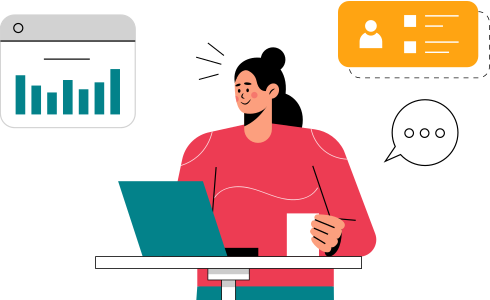
What Happens After Detection?
An Operator May:
- increase monitoring
- request renewed KYC
- verify the source of funds
- restrict bonus access
- pause withdrawals
- send the case for manual review
- block linked accounts after confirmation
The Future of Anti-Fraud
- AI-based risk prediction
- behavioral biometrics
- real-time activity monitoring
- integrated KYC, AML, CRM, and fingerprinting
- LLM-assisted investigations and relationship analysis


Key Takeaways
- Multi-accounting creates financial, operational, and regulatory risks
- Even a small number of linked profiles can distort core KPIs
- Effective detection combines technical, payment, and behavioral signals
- Graph analysis is critical for identifying large account networks
- A multi-stage review process protects legitimate players from false positives
Multi-accounting can be described as the creation of 2 or more game accounts on a single platform by the same person.
Almost all digital casinos allow each player to register only one profile. This rule is specified in the client agreement and applies not only to marketing restrictions but also to requirements regarding security, licensing, and financial control.
Some gamblers deliberately skirt the established rules. So they try to gain advantages not available when using a single profile.
It is worth noting that multi-accounting does not always look like registering dozens of interconnected pages. In many cases, it involves 2 or 3 profiles that are applied consistently or used in parallel.
Why Numerous Profiles Appear
The reasons can be different. In some cases, players simply try to re-cash a bonus or bypass the platform's internal restrictions. However, multi-accounting often becomes part of organised fraudulent schemes involving dozens or even hundreds of fake accounts.
Let us look at the most common grounds for breaking the rules.
Receiving Welcome Offers
Almost all licensed operators grant new customers starting payments. These can include free spins, cashback, a first-deposit bonus, participation in special promotions, and much more.
Such offers are limited to one beginning gambler and are provided only once.
Some casino visitors try to register additional accounts to re-cash the starting incentive. To do this, they use new e-mail addresses, modified personal data, VPN services, or even separate devices.
Bonus Abuse
Here, fraudsters do not simply register fake accounts; they systematically profit from the operator's rewards program.
The scheme is as follows:
- various fake accounts are created;
- each profile receives a welcome bonus;
- minimum wagering requirements are fulfilled;
- funds are withdrawn after the conditions are met;
- the process is repeated with new profiles.
In this scheme, the scammers try to minimise their expenses. To do this, they apply low-risk strategies, choose games with high RTP, or calculate advantageous scenarios of compliance with wagering conditions in advance.
Large-scale fraudulent schemes can involve tens, hundreds, or even thousands of accounts, which are often created by organised groups. They use specialised software for automatic registration, profile management, and playing through bonus campaigns.
Circumvention of Limits and Rules
Most online casinos have internal restrictions on:
- maximum size of bets;
- the number of simultaneously active bonuses;
- participation in specific promotions and tournaments;
- the amount of daily and monthly deposits;
- receiving a cashback and other rewards.
By using several accounts, clients basically distribute their activity across different profiles. This allows them to participate in the same promotion offers many times, increase their total size of bids, or circumvent restrictions that apply to a single user profile.
Such schemes are often used to bypass responsible gaming tools. Players who have reached the established deposit limit may try to register a new account and continue placing bets. This clearly violates RG requirements.
Attempt to Avoid Blocking
If a page has previously been banned, some customers try to return to the casino under a new name.
Reasons for banning may include:
- violation of the bonus program’s conditions;
- suspicion of fraud;
- use of prohibited payment methods;
- breaking responsible gaming rules;
- provision of false information during registration;
- attempts to bypass KYC or AML requirements.
To hide their connection to a previously deactivated profile, attackers use various masking techniques. Scammers create a new e-mail address, buy another SIM card, connect via VPN or proxy servers, and change their personal information.
Organised Fraudulent Schemes
Unlike ordinary players who create 1–2 additional accounts, groups of criminals can simultaneously manage dozens, hundreds, or even thousands of profiles.
To do this, the following elements are used:
- specialised software;
- antidetect browsers;
- virtual machines;
- automated registration tools;
- databases of pre-prepared personal data;
- mobile device and SIM card farms.
Fraudulent accounts can be used for a wide range of purposes, including the mass acquisition of welcome bonuses, money laundering through gaming transactions, artificial increase in the activity of certain titles, etc.
Why Multi-Accounting Is Dangerous for Business
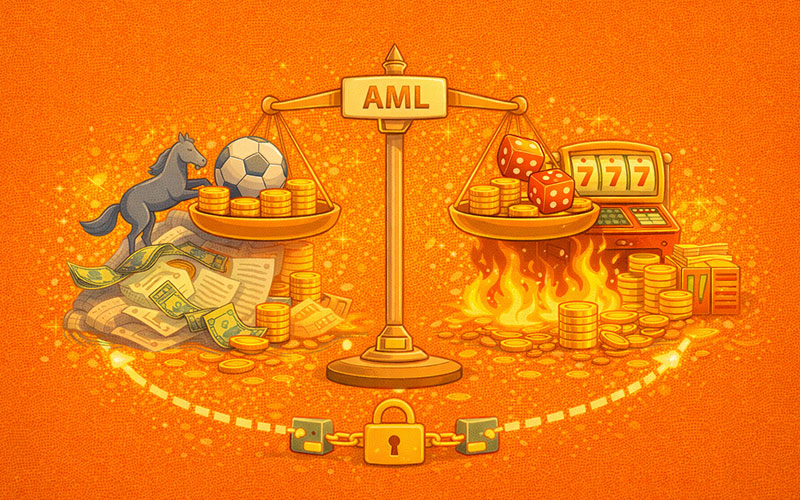
Even a small number of false profiles can lead to distorted analytics, increased operating expenses, and higher regulatory risks.
Financial Losses
Almost every iGaming project invests heavily in loyalty programs. Welcome bonuses, free spins, cashback, and other promotions become part of the casino's marketing strategy designed to attract clients.
When a single person creates multiple accounts, operators pay the starting reward to the same user multiple times. This means the company does not receive the expected economic effect in the form of a new customer. If such incidents occur regularly, the financial hit increases rapidly.
Apart from the repeated bonuses, entrepreneurs can also lose money for other reasons:
- unjustified payments as a result of promotion offers;
- cashback receipt from multiple accounts;
- abuse of loyalty programs.
For large international operators, such damages can reach hundreds of thousands of dollars per year.
Increase in Marketing Expenses
Almost all bonus campaigns are calculated based on the Customer Acquisition Cost (CAC). Online casino owners set the advertising budget in advance, predict the number of registrations, and the time for ROI.
However, with multi-accounting, this method starts to work incorrectly.
Instead of attracting new players, entertainment resources reinvest in already existing clients. This results in less efficient spending and significantly increases the CAC metric.
The creation of several profiles reduces the effectiveness of almost all advertising tools:
- welcome bonuses;
- referral programs;
- promotions;
- seasonal offers;
- loyalty programs.
Marketers receive a false impression of the results of their campaigns and often make decisions based on unreliable data.
Distortion of Business Metrics
Most analytical reports are based on the assumption that an account corresponds to one real player. With multiple linked profiles, this logic no longer works.
The creation of many pages can negatively affect the following KPI of gambling projects:
- conversion rate;
- retention rate;
- ARPU (Average Revenue Per User);
- LTV (Lifetime Value);
- effectiveness of bonus campaigns;
- performance of advertising channels.
For example, the system may show an increase in the number of new customers, although in fact a significant portion of registrations belong to existing players.
The audience retention assessment is distorted in a similar way. A single gambler with multiple profiles may appear to be 2 or 3 independent clients, leading to flawed conclusions about product quality and marketing effectiveness.
Increase in Manual Labour
Additional burden falls on:
- support;
- finance team;
- KYC specialists;
- AML department staff;
- security service.
Each suspicious account requires the verification of documents, analysis of money transfers, studying gaming sessions, and an individual decision.
Compliance Risks
In most jurisdictions, licensed operators are required to adhere to the requirements in the following areas:
- KYC (Know Your Customer);
- AML (Anti-Money Laundering);
- responsible gambling;
- fraud management;
- personal data protection.
If clients create several accounts, this can be used to circumvent identification procedures, conceal the origin of funds, or exceed the established limits.
The discounting of such cases often leads to the violation of licensing requirements. Depending on the jurisdiction, consequences may include significant fines, restrictions on certain activities, and suspension or revocation of licences.
How Operators Detect Multi-Accounting
The achievement of this goal is based on a comprehensive analysis of technical, financial, and behavioural data. Each indicator rarely proves a violation, but their combination enables accurate identification of fraud.
Verification of Personal Information
The system analyses the user's first and last name, date of birth, residential address, phone number, documents provided during KYC, bank details, and other aspects stated in the application form. The obtained data is then compared with already existing profiles, and matches are being recorded.
At this stage, document recognition and authentication technologies are used as well. If the system detects that the same passport information is specified in multiple profiles, the account will get an elevated risk level.
Device Fingerprinting
This is the creation of a digital trace of the device based on many characteristics:
- model of gadgets;
- operating system;
- browser version;
- screen resolution;
- a list of installed fonts;
- WebGL parameters.
The main advantage of device fingerprinting is that it is extremely difficult for customers to change all of these parameters simultaneously.
Even if an attacker clears cookies, changes the Internet Protocol ID, or logs in incognito mode, the system will still detect that both profiles are being used from the same gadget.
IP Address and Network Infrastructure Analysis
The system checks the use of VPNs and proxy servers, Tor grid, the geographic location of gamblers and their data centre, IP matches and history, frequency of switching between different countries, and other factors.
For example, suspicion may arise when multiple profiles are regularly logged in from the same digital address, or when the same player registers on the website from Poland within a short period, and then from Canada a few minutes later.
Such signs alone do not prove the presence of multi-accounting, but they do become indicators that can affect the overall level of risk.
Behavioural Analytics
Modern anti-fraud platforms analyse the actions of gamblers in online casinos. Algorithms compare game preferences, bet frequency, decision-making speed, activity time, website navigation patterns, and other parameters.
For example, if several accounts log in daily at the same time, launch the same products, place bids, and fulfill bonus conditions almost simultaneously, the likelihood of an accidental coincidence becomes extremely low.
Behavioural patterns help identify linked profiles even in cases where technical indicators have been successfully hidden.
Payment Data Analysis
For fraudsters, it is often more difficult to change bank details than to simply create a new user page. Therefore, the study of financial information remains one of the most effective tools in the fight against multi-accounting.
The system checks:
- bank cards;
- e-wallets;
- cryptocurrency addresses;
- the history of previous transactions;
- the use of the same settlement method by multiple players.
Even if accounts are registered under different names, the repeated application of the same payment instrument can indicate a connection between them.
Graph Analytics
Instead of searching for certain coincidences, the system builds a whole network of relationships between various objects.
A single model integrates:
- gaming accounts;
- devices;
- IP addresses;
- e-wallets;
- e-mail addresses;
- entertainment sessions;
- financial transactions.
Based on the collected data, the graph system can identify hidden interconnections that are almost impossible to detect through manual analysis. For example, algorithms can determine that several dozen profiles belong to the same client group, even if there are no direct matches between them.
What Happens After Multi-Accounting Is Detected
The anti-fraud system only assesses risks and transmits the information to the risk engine. A decision is then made on further action.
If the threat level is low, the program can continue monitoring an account without any restrictions. If there are more matches, additional checks of the suspicious profile are initiated.
Depending on the situation, entrepreneurs may perform the following actions:
- carry out a second KYC verification;
- request confirmation of the source of funds;
- temporarily restrict participation in bonus programs;
- suspend the processing of withdrawal requests;
- send a profile for manual verification;
- combine information from several accounts as part of an internal investigation;
- block linked pages after confirming a violation of the rules.
This approach minimises the likelihood of errors and avoids unjustified restrictions for bona fide customers.
The Future of Combating Multi-Accounting
The development of several areas is expected in the coming years:
- Forecasting based on artificial intelligence. By analysing the behaviour of new clients, AI algorithms will be able to proactively identify signs of criminal schemes and automatically increase the level of control.
- Integration with behavioural biometrics. Anti-fraud systems will take into account not only the technical characteristics of devices but also individual patterns. This includes typing speed, mouse movements, screen touch features, page scrolling, and other indicators.
- 24/7 operation. Every gambler's action (registration, deposit, product launch, bonus receipt, or withdrawal of funds) will be analysed immediately after it is completed, allowing for the prompt detection of suspicious steps.
- Integration with KYC, AML, and CRM services. Device fingerprinting, Know Your Client, Anti-Money Laundering, and Customer Relationship Management tools will function as a single ecosystem.
- The use of LLM models. They will be able to automatically analyse investigative materials, identify hidden connections between user pages, prepare reports, and help make decisions on complex cases.
The Main Things about Multi-Accounting in Gambling
The creation of various profiles is a common problem in the online casino industry.
Key aspects that operators should remember:
- Multi-accounting leads to financial and reputational risks, an unjustified increase in marketing and customer support costs, as well as the distortion of business metrics. Entrepreneurs often face compliance violations, which lead to problems with regulators.
- To identify fake accounts, business owners check personal data, create device fingerprints, and evaluate IP addresses along with network infrastructure. Graph analytics, which evaluates the link between different components (sessions, payment details, and accounts), is extremely effective.
The Casino Market studio provides cutting-edge solutions for the gambling industry. We offer turnkey projects, software for land-based locations, lottery platforms, certified content, security solutions, and much more.

Have questions or want to order services?
Contact our consultants:
- e-mail: manager@casino-market.com
- feedback form.
Check the information used to contact us carefully. It is necessary for your safety.
Fraudsters can use contacts that look like ours to scam customers. Therefore, we ask you to enter only the addresses that are indicated on our official website.
Be careful! Our team is not responsible for the activities of persons using similar contact details.