Since their early adoption in iGaming, dollar-pegged crypto assets have looked like one of the cleanest ways to move money quickly across borders. At the same time, players and operators did not have to absorb the full impact of price volatility. That logic still holds to a point. Stablecoins remain a major part of modern on-chain payments. They processed $28 trillion in real economic volume in 2025. On top of that, USDC still presents itself as a 1:1 redeemable, fully backed digital dollar, with 77.8 billion tokens in circulation as of April 2026.
Still, March 2026 changed the tone of the discussion. Circle froze 16 USDC wallets linked to operating businesses, including exchanges and online casinos. This triggered strong public backlash and criticism. For operators, that was not just another crypto headline. It was a reminder that a stablecoin can be fast and useful, yet still depend on a central issuer with the power to interrupt access.
That is why the real question for casino brands is what role stablecoins should play within a payment stack that must remain reliable under pressure. If you want a crypto-ready platform with a cashier designed for speed, flexibility, and lower operational risk, speak to Casino Market about a solution built for modern operator realities.
Order a turnkey or White Label platform with a fully adapted payment system aligned with the realities of your operating region.
Stablecoins as the Primary Casino Choice
The rise of dollar-backed tokens in gambling cashiers did not happen by accident. Operators moved in that direction because the model solved several practical problems at once. Stablecoins offered the speed of blockchain rails, ensuring that every deposit, withdrawal, and bonus calculation can be processed without the need to depend on traditional banking hours. Circle and Tether both describe their main products as assets pegged 1:1 to fiat and designed for fast blockchain-based transfers, which explains why they became so attractive for platforms looking to maintain a consistent payment flow.
Why stablecoins became the default option:
- easier pricing for deposits, bonuses, and balances;
- less visible volatility for players;
- quicker cross-border settlement;
- lower friction for new crypto users;
- simpler treasury planning than fully floating assets.
For operators, this was never only about user comfort. A more stable cashier also made CRM, promotions, and support work easier. When the balance says $100 today and still looks like $100 tomorrow, the whole product feels more predictable. That matters in a sector where payment trust affects retention almost as much as content.
What the March 2026 USDC Freeze Changed
The spring incident mattered because it exposed a weak point that many teams preferred to treat as theoretical. As long as the issuer remained in the background, stablecoins felt like neutral infrastructure. Once wallets connected to operating businesses were frozen, that assumption became harder to defend. Reports on the case said the affected addresses were linked to exchanges, foreign firms, and online casinos, which pushed the issue directly into the gambling discussion.
Liquidity and Trust Issues
When a token issuer blocks access, the damage affects reputation. However, it can also impact working capital, disrupt payout timing, delay partner settlements, and force support teams to explain issues they did not create. A freeze can become a treasury event first and a brand problem second.
That is especially important in gambling. A player may accept a slower game round or a short verification delay. The same person is far less patient when a withdrawal stalls. If a wallet linked to day-to-day business flow becomes inaccessible, the effect can spread through the entire operation very quickly.
Ubiquity of Legal Power
The shock in March came from the visibility of the action. No new rights suddenly appeared. Everything was already clearly laid out on paper. Circle’s USDC terms state that the company reserves the right to block certain addresses. If those are Circle-custodied addresses, the company may freeze associated USDC temporarily or permanently at its sole discretion when it believes the activity may be illegal or in breach of its terms. The same terms also state that Circle may be required to freeze USDC or surrender associated reserves if it receives a valid legal order.
Tether’s legal terms contain similar language. They state that the company may suspend or terminate access to services and freeze Tether tokens where required by law or where, in its sole discretion, it believes doing so is prudent or that the user has breached the terms or applicable law.
This does not mean stablecoins are unusable. It means operators need to stop treating issuer-backed tokens as if they offer the same level of control as decentralised assets. They do not.
Distinction in Gambling
A retail trader can sometimes wait. A casino operator often cannot. Gaming businesses run on constant movement, including player funding, merchant processing, fraud checks, affiliate settlements, bonus credits, and treasury transfers. Even when gameplay continues because balances already sit within the operator’s internal ledger, a blocked rail can still disrupt withdrawals, liquidity planning, and confidence in the cashier.
That is the deeper lesson from March 2026. Stablecoins may look like digital cash on the surface, but from an operator’s perspective, they behave more like programmable settlement tools issued by private companies that retain meaningful control over access.
Classic Value or Direct Control
Many discussions reduce this subject to a simple comparison between stablecoins and Bitcoin. That framing misses the real point. The operator is choosing between two risk models that do not divide into safe and dangerous, and each has its own characteristics.
BTC vs stablecoin comparison:
- Control over the asset. Issuer-backed tokens offer price stability, but the supplier can intervene. Circle and Tether reserve freeze powers in their legal terms. Bitcoin, by contrast, operates as peer-to-peer money without a central authority or bank controlling issuance and transaction management.
- Exposure type. Stablecoins reduce day-to-day pricing swings. Decentralised coins remove issuer dependence, but they expose the business to market movement instead. This is why the stablecoin question is really about treasury management.
- Compliance behaviour. Centralised tokens fit more neatly into formal oversight because the issuer can act. That can reassure regulators and institutional partners, but it also creates another point of external dependency for the operator. Stablecoin-specific compliance has become a top-tier regulatory priority as adoption rises.
- Operational planning. A stablecoin-heavy cashier is easier to model for bonuses, VIP offers, and payout values. A decentralised mix requires stronger hedging discipline, faster conversion logic, or a higher tolerance for price movement.
- User perception. Some players value predictability above everything else. Others care more about censorship resistance and direct ownership. An operator that understands both groups can shape a better product than one that commits fully to either approach.
Bitcoin’s Place in the Cashier
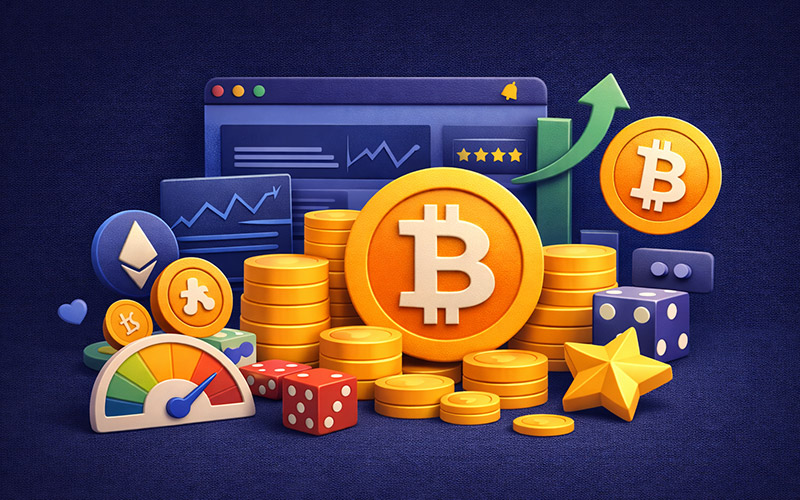
BTC still often has a place in large operators' projects. However, it is not treated as a universal replacement for every stablecoin use case. Bitcoin remains relevant because it solves a different problem. It was designed as peer-to-peer electronic cash and operates without a central authority or banks. That feature is exactly why many operators and crypto-native users continue to rely on it. There is no equivalent corporate issuer standing above the network with a contractual freeze clause.
At the same time, BTC introduces its own friction. Price movement can reshape the value of balances, distort bonus economics, complicate reporting, and create hesitation among users who simply want to deposit, play, and withdraw without thinking about market fluctuations. From an operator’s perspective, Bitcoin is strongest when it is part of the cashier, not when it is forced to carry the entire crypto payment strategy on its own.
That is why a binary answer usually fails. Stablecoins still work well for predictable settlement and low-friction user entry. Bitcoin is better suited for brands that want a stronger decentralised angle and less issuer dependency. The smarter approach is usually to let each asset play the role it suits best.
Beyond Bitcoin
Some operators do not want to rely only on BTC, yet they also do not want a cashier built entirely around centralised dollar tokens. In that case, the better path is usually diversification rather than ideology.
A broader crypto mix may include several practical options:
- Ethereum for broad recognition and easy integration across many crypto stacks;
- Litecoin for lighter fees and straightforward transfers;
- Tron-based assets for cheaper movement in high-frequency cashier flows;
- Monero for privacy-sensitive segments, where regulation allows it;
- Cardano or similar large-cap assets for teams that want alternatives beyond BTC and ETH.
This is a way to reduce concentration risk. Decentralised coins can still move sharply in price. That part does not disappear. The shape of the risk does change. Instead of depending too heavily on one private issuer, the operator spreads exposure across different rails and use cases.
The March 2026 freeze should not push operators into panic or into one-token selection. It should lead to better architecture.
The most practical response usually includes several actions:
- Do not build the cashier around a single stablecoin. A single-token setup may look neat in a sales deck, but it creates a single point of operational weakness. A modern platform should support more than one settlement route.
- Separate treasury from player-flow wallets. This does not remove every risk, yet it reduces the chance that one disruption affects the entire operation at once.
- Use instant conversion where needed. If the business wants player-facing stable balances but does not want to carry excessive issuer exposure, conversion tools can reduce idle risk.
- Set exposure limits by asset. A platform should know how much of its working capital sits in USDC, USDT, BTC, or any other token at any given time. That sounds obvious, but many teams only discover the real numbers when stress appears.
- Write clear withdrawal and delay policies. If a rail fails, support teams should not need to invent explanations on the spot. Terms, workflows, and customer messaging should already be in place.
- Choose platform partners with real crypto flexibility. The payment stack now matters as much as the game lobby. A strong provider should support multi-asset cashier logic, reporting, wallet separation, and compliance controls from the start.
For platform architecture, this issue goes beyond token preference. It is really about system design. A weak setup treats crypto as a marketing feature. A stronger setup treats it as infrastructure. That means the cashier should support more than one digital asset, route payments intelligently, keep audit trails clear, and give operators room to react when one rail becomes slow, expensive, or politically exposed.
It also means treasury, compliance, and UX should not sit in separate silos. Stablecoins now occupy a central place in payment growth and compliance oversight. Once that is the case, crypto support can no longer be handled as a simple add-on. It requires proper operational ownership.
For operators, the conclusion is fairly simple. Stablecoins still belong in the product. They are useful, fast, and commercially relevant. However, they should sit within a broader structure that assumes interruptions are possible and prepares for them in advance.
The Main Things about Gambling with Stablecoins
Dollar-pegged tokens still make sense for iGaming activities, but the March 2026 USDC freeze showed that convenience and control are not the same thing. Operators that want a stronger payment model should think less about picking one and more about a cashier design that stays functional under pressure.
Key points to keep in mind:
- Stablecoins remain important because they combine blockchain speed with a more predictable unit of value.
- The March 2026 USDC wallet freeze showed that issuer-backed tokens can create direct operational risk for gambling businesses.
- Circle and Tether retain legal powers to freeze or restrict token access under certain conditions.
- Bitcoin and other decentralised coins reduce issuer dependence, but they introduce greater treasury and pricing pressure.
- The smartest operator response is a multi-asset cashier with separated wallets, exposure limits, and clear fallback routes.
Get in touch with Casino Market to launch or upgrade a project with a payment setup that keeps your crypto offer usable, flexible, and far less exposed to one point of failure.
Order a turnkey or White Label solution with a crypto-powered cashier system. Buy the latest gambling software from the industry-leading iGaming aggregator, Casino Market.

Have questions or want to order services?
Contact our consultants:
- e-mail: manager@casino-market.com
- feedback form.
Check the information used to contact us carefully. It is necessary for your safety.
Fraudsters can use contacts that look like ours to scam customers. Therefore, we ask you to enter only the addresses that are indicated on our official website.
Be careful! Our team is not responsible for the activities of persons using similar contact details.