The main reason for losses among most bookmakers is not traffic attraction issues but ineffective risk management. Business profitability is determined precisely at this level.
It is especially relevant in the context of progressively complex products and increasing real-time betting volumes. GGR alone is no longer sufficient to assess a company’s financial health objectively.

Profit Starts with Risk Management

Common Operator Mistakes:
- reducing margins
- increasing betting limits
- aggressive bonus campaigns
- weaker risk controls
Three Separate Functions
- Pricing → sets the odds
- Trading → adjusts markets based on betting activity
- Risk Management → controls the operator's financial exposure
Main Risk Sources
- inaccurate odds
- unexpected match outcomes
- accumulated pricing errors
- peak tournament periods
- concentrated betting activity
Operational Risks
Major Sporting Events Put Pressure on:
- registration & KYC
- live betting
- payment systems
- bonus campaigns
- customer support


Key Safeguards:
- automation
- resilient infrastructure
- real-time monitoring


Why Diversification Matters
Operators Improve Stability by Expanding into:
- esports
- niche sports
- deeper live betting markets
- new betting verticals

Real-Time Risk Management
An Effective Platform Should Automatically:
- adjust betting limits
- update margins
- suspend markets
- react before the next bet is accepted
Automation + Human Expertise
Automation Handles:
- betting limits
- alerts
- market suspension
- continuous monitoring


Experts Focus on:
- VIP customers
- new markets
- exceptional cases
- regulatory changes
Player Profiling
Modern Systems Should Quickly Identify:
- professional bettors
- arbitrage players
- betting syndicates
- fraudulent activity
In-House vs Managed Services

In-House Trading
- maximum control
- higher operating costs
- slower scaling

Managed Services
- immediate expertise
- faster expansion
- lower operational costs
Choosing a B2B Provider
Evaluate Whether the Provider Offers:
- separate Pricing, Trading & Risk teams
- automated workflows
- real-time risk monitoring
- comprehensive live betting coverage
- integrated KYC & AML
- dynamic player profiling
Industry Trends
- AI-powered predictive analytics
- dedicated esports risk management
- expansion into LATAM, Asia & Africa
- automated decision-making
- deeper compliance integration


Key Takeaways
- Risk management is the foundation of sportsbook profitability
- Automation minimizes operational losses
- Diversification improves long-term stability
- Leading B2B providers deliver real-time risk management capabilities
Casino Market has compiled key indicators to help evaluate sportsbook effectiveness and build a sustainable foundation for successful long-term business growth.
Incorrect Assessment: Example and Consequences
A typical management error scenario can be illustrated through common preparations for a major tournament:
- Steps taken. To stimulate interest, margins are reduced (from 7% to 5%), limits are increased in key markets, aggressive bonus programs are launched, and some risk filters are relaxed.
- Primary outcome. The company’s turnover climbs by 30%, and the GGR indicator grows by approximately 25%.
- Actual results and hidden losses. A detailed analysis reveals that 3 high-stakes players won around €500,000 over a few days. Bonus expenses more than doubled, and quarterly profits were 8–10% lower than projected.
This example confirms that superficial KPIs do not reflect the entire picture. Project economic issues may be concealed beneath the surface.
Pricing, Trading, and Risk Management: Separate Functions
The merging of these concepts leads to significant financial losses for bookmakers. Any entrepreneur assumes challenges, but only those who handle them consciously achieve stable profits. It is a mistake to combine all processes, from setting coefficients to calculating bets, into a single whole.
These functions are interconnected but have a strictly defined order and solve different problems:
- Pricing determines the initial level of odds.
- Trading adjusts the offerings based on the real-time bid volume.
- Risk management determines the liabilities an operator is willing to accept after transactions have occurred.
Even an ideal financial model will not protect against major losses if the company lacks control over the accumulation of exposure. It can grow following the snowball effect if not handled properly.
Consequences of Merging the 3 Areas
Operators who view these fields as a single discipline typically make 2 systematic errors. First, they select and evaluate B2B solution providers solely based on the accuracy of the offered odds. Second, vulnerabilities in security and control software are only noticed when financial losses have already been recorded in reports.
Today, margins are becoming less predictable. Business scale alone no longer guarantees financial stability. Operators that do not separate these 3 processes lose grip over profitability because they cannot accurately identify the source of the negative impact on margins.
Criteria of Supplier Evaluation
An effective audit of a B2B partner should begin with an analysis of its internal structure. It is essential to clearly understand whether the provider separates pricing, trading, and risk management.
If the supplier opts for independent functions, they most likely have specialised teams for each category. A monolithic service package is the choice of those focusing only on sales.
Seasonality: Additional Sources of Market Risk
Operating losses and threats in the sports betting industry are systemic and directly tied to the match and competition calendar.
The main challenges arise in the following situations:
- odds formation for specific geographic areas;
- results outside the scope of standard statistical models;
- accumulation of minor pricing errors within a single tournament.
Historical data from major contests confirms that hazards are not random. For instance, high conversion rates of favourites in the 2018 FIFA World Cup’s group stage led to a significant reduction in margins. The simultaneous 2024 European Championship and Copa América have sharply increased the risk for companies that failed to ensure sufficient sports diversification.
Recommendations on Supplier Assessment
When auditing B2B partners, operators should not limit themselves to examining average monthly indicators. These rarely reflect true resilience during peak periods.
Instead, it is wiser to request data from suppliers on actual revenue distribution based on at least the last 3 major events. It will enable the assessment of how the system copes with high-risk concentrations under stressful conditions.
Operational Loads and Infrastructure Resilience
Internal issues more often cause critical outages in betting platforms than market metrics or audience behaviours.
Financial losses during major tournaments are usually the result of:
- delays in limit adjustments;
- bonus mechanics that are not suitable for top loads;
- high reliance on manual processes during peak periods, and other causes.
Influence of Extreme Volumes and Pressure
Large-scale events (e.g., the World Cup) severely burden all system nodes:
- customer support;
- processing of payments;
- bonus and advertising campaigns;
- visitor registration and data verification;
- real-time wager acceptance and settlement.
Role of Human Factor and Automation
High backend architectural capacity alone is not enough to completely mitigate operational risks. Manual tasks often become the key vulnerability. Any choice that goes well under normal conditions can become a crisis during peak periods.
To protect profitability and retain the player base, infrastructure automation and resiliency are essential. Implementing real-time performance monitoring, programmed exposure control, and a scalable architecture minimises operational costs that directly impact a project budget.
Concentration Risk: Hidden Threat to Revenue
Focusing a sportsbook on football or a few leading leagues creates pitfalls for a business. If a single discipline accounts for approximately 80% of turnover, the entrepreneur becomes overly dependent on calendar seasonality.
A similar vulnerability arises at the customer base level. When just 0.1% of major players generate a third of GGR, the company’s financial performance becomes critically volatile.
Diversification for Revenue Stabilisation
Our team recommends adding eSports betting to the catalogue:
- Such an offer broadens the target audience and draws in new demographics.
- The fresh category introduces alternative real-time interaction models and specific markets.
- The product allows the bookmaker to remain afloat regardless of the traditional sports season’s cycles.
Recognising minor disciplines as an essential risk-management tool is the most effective way to achieve more predictable profits throughout the year. Systematic development strengthens the positive result.
Tips for Selecting a Software Provider
When searching for a B2B partner, operators should focus on fundamental metrics that reflect the level of business diversification. One of them is the range of secondary sports and the depth of the live betting lineup for each event.
Another significant aspect is the share of GGR generated outside the 3 most popular disciplines. The provider’s effectiveness in generating such revenue over the past year is essential.
Real-Time Technologies for Handling Liabilities

Most B2B solution providers claim they deliver instant services. Nevertheless, some supply information quickly but do not ensure the solution’s effectiveness. The key criterion for the productivity of real-time technologies is their ability to turn incoming data into operational management choices before the system processes the next bet.
Updating odds every 200 milliseconds is insufficient if the limits are revised only every 15 minutes. Information must be instantly delivered to the exact node where decisions are made.
This aspect is critical during sudden match changes (red cards, injuries, etc.), when the wagering structure for thousands of bets alters in seconds. Companies with deferred responses to such shifts face delays and incur losses.
Programmed Thresholds
A practical solution to the issue is implementing automated filters. When the established liability limit is exceeded, the system should immediately suspend staking, adjust the margin, or submit a request for verification.
Manually monitoring each wager overloads risk management specialists. Instead, they should focus on analysing general patterns of exceeding these thresholds.
Human Factor and Algorithms: Balance
Automation optimises processes, but does not eliminate the need for qualified traders. When scaling a business, a balance between the 2 edges is essential.
Programmed support is needed to perform routine, standardised operations, such as:
- adjusting limits;
- generating alerts;
- pausing categories.
Human intervention is used to address non-standard tasks, such as covering the risks associated with VIP clients, assessing new market types, and adapting to regulatory changes. A complete rejection of automation caps growth potential, while excessive implementation without proper expert oversight scales tech errors across thousands of bets.
Player Profiling as a Risk Management Tool
Understanding the audience is as important as infrastructure stability. Nevertheless, the same data, such as bid size and frequency, is used by different departments for conflicting purposes. In marketing, these metrics are necessary to personalise services, while in risk management, they are required to monitor liabilities.
Expert players and arbitrageurs should be considered as challenging factors, not a segment to drive growth. If the platform is unable to identify a professional syndicate or a sharp bettor after the 1st few stakes, financial losses become inevitable.
KYC and AML in the Security System
These procedures are the primary sources of data for threat assessment. Isolating them from overall risk management processes reduces the effectiveness of protection.
Any suspicion under the Anti-Money Laundering framework signals a potential hazard to liquidity. Meanwhile, inconsistencies in data during Know Your Customer checks indicate a direct possibility of fraud. Viewing compliance and risk-handling systems as independent stages creates blind spots where critical vulnerabilities may go undetected.
In-House Trading vs Outsourcing: Choosing a Model
The debate about whether to assemble a proprietary trading division or opt for 3rd-party managed services is often oversimplified.
In practice, most bookmakers already use external solutions:
- buy odds feeds;
- implement ready-made pricing styles;
- employ providers’ IT infrastructure to address threats, etc.
The main question is which company processes should be kept internally, and which are more appropriate to delegate. This distribution of responsibilities defines the project’s long-term effectiveness.
Advantages of 3rd-Party Managed Services
Outsourcing control over trading operations to B2B associates gives bookmakers access to pricing expertise and ready-made systems. The need to maintain a large team dissolves.
This nuance is especially important when a company is rapidly expanding its offer or entering new regulated markets. Independent effort may cost time or mistakes, and thus money.
Comparing In-House and Outsourcing Models
To select the optimal approach, it is worth exploring the key features of both based on key criteria:
- Expenses. A corporate team increases the costs of staff maintenance and IT infrastructure development. Meanwhile, 3rd-party providers reduce the company’s operational overhead.
- Level of control. In-house specialists handle all processes and strategies. Outsourced management involves shared administration with an ally.
- Product launch and scalability. A separate division entails slower expansion and longer decisions. Suppliers’ structures guarantee rapid scaling and accelerated offer rollouts.
- Expertise and personnel. Corporate experts require independent recruitment, hiring, and retention of highly specialised individuals. At the same time, 3rd-party solutions provide instant access to trading expertise and insights.
- Performance monitoring. A proprietary team relies solely on local tracking means. Outsourcing implies continuous process optimisation with professional support.
External management is not universal. Some brands consciously choose an in-house model for tight control over a unique pricing strategy or specific VIP players, while others prioritise development speed and cost reduction. The most effective collaboration is achieved when the operator views the B2B supplier not simply as a software seller, but as a strategic ally.
Regulatory Risks and Compliance: Security Elements

Adherence to legal requirements is an integral part of gambling project management. Any oversight-related violation poses a direct threat to a business. And vice versa: a large-scale security breach entails sanctions from supervisory authorities.
Consequences of Non-Adherence
Weak compliance controls lead to high operational and financial costs:
- Lack of proper KYC verification. Working without proper player identity checks exposes the entrepreneur to unlimited commercial liability, as they have no idea exactly who is making payments.
- Insufficient user protection. Regulators increasingly view vulnerabilities in audience safety systems as a sign of general company governance failures.
- Penalties. UKGC statistics show that the greatest losses occur when problematic behaviour should have been recorded by both legal and risk management divisions, but was missed by both.
Integrating Compliance into Processes
Tools that ensure adherence to laws are no longer just a formal administrative responsibility. Today, they are an active element of revenue protection and financial sustainability.
The most resilient market positions are occupied by those who integrate regulatory monitoring directly into the daily workflows. Such betting projects remain stable in an ever-changing environment.
Checklist for Supplier Evaluation: 9 Key Questions
Based on an analysis of operational, external, and compliance challenges, we have developed a range of key inquiries to providers. These topics are important for distinguishing 3rd parties with truly functioning risk management tools from those that are purely marketing-driven.
Metrics for examining compliance systems:
- Diversification of functions. Does the supplier separate pricing, trading, and dealing with liabilities into independent areas, each handled by a dedicated team?
- Historical profit data. What was the actual margin distribution for the last 3 major football tournaments (full statistics, not averages)?
- Automation during peak loads. Which decisions does the software perform on its own, and which continue to rely on manual labour during the busiest periods?
- Deep line diversification. Is there sufficient coverage of secondary sports, and is there a catalogue of live betting offers for each discipline?
- Technical response speed. What is the exact delay between when a risk limit is exceeded and when automation is reduced? Is this parameter recorded for subsequent audits?
- Process balance. Is a precise percentage breakdown of programmed vs manual decisions provided (during a standard tournament week)?
- Dynamic profiling. How quickly can the system change a player's category when their behaviour pattern changes? Is this status automatically applied to limits, odds, and bonus access?
- Operating model allocation. Which trading stages should the entrepreneur retain in-house, and which are more cost-effective to delegate to a B2B associate?
- Compliance integration. Are law adherence principles implemented in an isolated external service, or are they embedded into the risk management and workflow?
Interpretation of Results
If a supplier can provide 7+ detailed responses, they have a mature architecture for dealing with hazards. Such enterprises are considered a reliable candidate for collaboration.
Less than 5 clear answers is a signal that the provider’s system likely has serious blind spots. Their offering is probably limited to basic functionality software.
Key Innovations in the Niche: Markets and Technologies
Over the next 5 years, this field’s landscape in the betting industry will be transformed by 3 key trends:
eSports as a Distinct Risk Zone
The sector is demonstrating stable long-term growth. Analysts predict that the global segment will reach approximately $5.1 billion by the end of 2026, with sustained engagement from a young audience.
The risk profile in this niche differs fundamentally from that of traditional sports:
- the historical match database is significantly smaller;
- competition integrity standards are still being developed;
- behaviour patterns do not align with those of classic disciplines.
Operators who view cyber games solely as a marketing tool to attract traffic will regularly incur losses by underestimating threats. Companies that have successfully assembled a dedicated and tailored liability management system will, conversely, increase their influence in the global industry.
AI and Predictive Analytics
Unlike promotion, where artificial intelligence is used for general tasks, in risk handling, machine learning technologies address the specific issue of scalability. Models can process massive amounts of data and identify anomalies in the behaviour for thousands of accounts significantly faster than any team of traders.
The main vulnerability for operators is purchasing an AI tool without actually using its core. When evaluating such services, it is important to check whether the system takes automatic protective measures or merely displays a dashboard, leaving decisions to human employees.
Expansion into Emerging Markets
Latin America, Africa, and some parts of Asia have demonstrated the highest rates of betting volume growth in the past decade. Nevertheless, regulations in these regions are still being consolidated and adjusted.
For operators in such areas, the quality of their IT infrastructure at the launch stage is critical. Companies entering new jurisdictions with weak control systems will face significant financial losses during the 1st major sporting tournament.
The Main Things About Risk Management in Betting
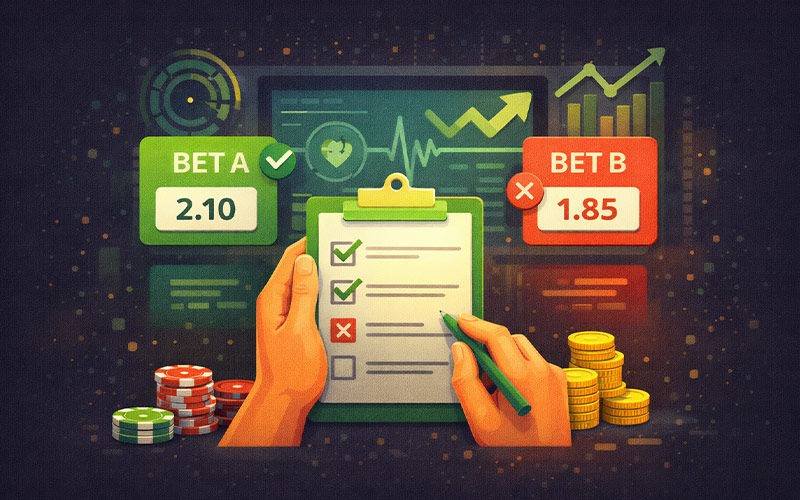
Effectively dealing with business threats is the foundation of commercial sustainability for a modern bookmaker.
Based on an analysis of common challenges, 3 key points can be identified:
- Separation of processes for margin protection. Pricing, trading, and handling liabilities are distinct disciplines that require specialised teams and tools. Merging them deprives brands of control over profitability, makes it difficult to identify sources of losses accurately, and increases vulnerability to syndicates and pro players.
- Automation vs operational and calendar risks. Large tournaments lead to peak infrastructure loads and expose the weaknesses of manual management. The only way to protect revenue in such conditions is to implement programmed thresholds and algorithms that can respond to threats instantly, before the next bet is accepted.
- Diversification and adaptation. The industry’s future lies in emerging markets, AI, and eSports. To achieve stable profits regardless of seasonality, operators diversify their offerings by adding secondary disciplines and adopt a flexible tech architecture that is ready for compliance integration and real-world predictive analytics.
Feel free to contact our specialists for more information on launching an online gambling business. We handle the entire production cycle and provide convenient, secure solutions with the broadest functionality.

Have questions or want to order services?
Contact our consultants:
- e-mail: manager@casino-market.com
- feedback form.
Check the information used to contact us carefully. It is necessary for your safety.
Fraudsters can use contacts that look like ours to scam customers. Therefore, we ask you to enter only the addresses that are indicated on our official website.
Be careful! Our team is not responsible for the activities of persons using similar contact details.