The gambling market in Africa is demonstrating incredible growth possibilities. As clear regulations and licensing mechanisms emerge, the landscape is becoming increasingly dynamic. Analytics from the RSA, Nigeria, and other countries across the continent confirm it.
Yet the primary question remains: what portion of the industry will not only survive but also evolve within the legal framework? Casino Market has examined the situation and identified the drivers of future development in the regional gaming segment.

Market in Numbers
- gambling is legal in around 45 of 54 countries
- fewer than 15 jurisdictions are considered mature
- roughly 25% of online revenue goes to illegal operators
- industry revenue could reach $22B by 2029


The Main Challenge
Key Barriers Include:
- outdated laws
- weak enforcement
- fragmented regulation
- strong offshore competition
- limited regulatory technology

South Africa’s Lesson

Key Success Factors:
- a clear legal framework
- cooperation between regulators and operators
- dedicated online rules
- fewer excessive administrative barriers
Why Players Choose Offshore Platforms
Illegal Operators Often Provide:
- simple interfaces
- local-language support
- faster withdrawals
- more payment methods
- seamless mobile onboarding


The Role of Payments
Key Requirements Include:
- mobile wallets
- fast deposits and withdrawals
- telecom integrations
- blocking illegal payment channels

Taxation and Licensing
Common Regulatory Mistakes Include:
- turnover taxes instead of GGR taxes
- high licensing fees
- unclear procedures
- unpredictable approval timelines
A More Sustainable Model Includes:
- GGR-based taxation
- transparent requirements
- proportionate fees
- stable rules
7 Regulatory Priorities
- Separate licensing for online gambling
- GGR-based taxation
- Stronger action against offshore operators
- Control of illegal payment channels
- Cooperation between public authorities
- Consumer protection and Responsible Gambling
- Predictable regulation


Key Growth Regions
West Africa
- Nigeria offers the largest potential
- Ghana is constrained by weak enforcement


East Africa
- Kenya is recovering from aggressive tax reforms
- Tanzania is gradually improving its framework


Francophone Africa
- still at an early stage
- strong medium-term potential
Southern Africa
- the continent’s most mature cluster
- growth in crash games, live casino, and virtual sports
Key Takeaways
- Africa remains one of the most promising iGaming regions
- Legal-market growth depends on competitiveness, not bans alone
- Payments, localization, and smooth UX are essential
- Excessive taxation strengthens offshore operators
- Sustainable growth requires a balance between public revenue, business viability, and player protection
Our specialists provide detailed consultations on launching and advancing projects in various GEOs. Our services range from targeted assistance to comprehensive turnkey packages.
RSA’s Experience: Setting Standards
Maintaining a significant market share in the legal segment is still a major challenge for countries across the continent.
A regulated background helps:
- protect consumers’ interests;
- ensure stable revenues for the local budget;
- comply with the principles of fair and responsible gaming.
South Africa was one of the 1st states in the region to lay the foundation for modern governance in this niche. The adoption of the National Gambling Act resulted in a clear legal structure, benefitting businesses and enabling their further development.
According to Jon Russell, Betway Group’s former Director, the industry’s potential and the attitudes of the officials are deeply interconnected. The RSA’s sphere evolved within a fragmented field. In many cases, operators’ growth was determined by the authorities’ willingness to engage in constructive dialogue with businesses and to take economic realities into account.
A prime example is the Western Cape Province. Here, the government’s progressive approach has helped create solid work conditions for legal brands.
Market size and demand are secondary in importance to regulation quality. Officials’ tangible steps and the absence of excessive barriers determine whether licensees strengthen their position or a substantial share of the sphere remains in the shadows.
Gap Between the Law and Practice
Despite formal gambling legalisation in the vast majority of African countries (approximately 45 out of 54), the real-world situation differs significantly from the declared norms. A noticeable obstacle to the industry’s efficient functioning is the differences between the adopted rules and their real-world implementation.
Enforcement-Related Issues in the Sphere
A striking example of ineffective oversight is the Democratic Republic of the Congo. Despite the existence of a framework, collected tax revenues are extremely low relative to operators’ colossal income. Similar situations are observed in other jurisdictions.
The key reasons for this situation are:
- outdated legislation with no adaptations to realities and technologies;
- fragmentation and lack of uniform regulatory standards at the national level;
- weak law enforcement, with authorities lacking the resources to control compliance.
Market Status and Advancement Prospects
According to Sean Coleman, the Chief Executive at the South African Bookmakers’ Association (SABA), fewer than 15 jurisdictions on the continent can be considered mature in terms of oversight. The remaining ones operate under fractional supervision or are entirely subject to offshore influence.
Despite current difficulties, the structuring process is accelerating. Analysts draw parallels with the development of gambling in Europe in the early 2000s and in the US until 2018.
The situation is unfolding according to a predictable pattern:
- Awareness of the issue. Authorities recognise that informal affairs are becoming out of control and thus require clear legal norms.
- Search for relevant models. Local governments are experimenting with various licensing, enforcement, and other related approaches.
- Adaptation of the framework. Officials must offer a strategy to bring operators out of the shadows by abolishing overly strict and fruitless measures.
Confronting Illicit Brands: Role of Products and Payments
An efficient battle against the unauthorised sector depends not only on legislation but also on the competitiveness of certified entities. The central goal is to make approved portals more appealing to players than unlicensed alternatives.
Rivalry with the Informal Segment
The key advantage of offshore bookmakers is a seamless experience. Only then do gamers consider the odds and pricing policy. Illicit websites draw in visitors with user-friendly interfaces in local languages, simple navigation, and straightforward withdrawals. A wide selection of casino payment systems and their processing speed are also influential.
To successfully compete with these strengths, licensed studios need to provide an equally high level of convenience. Additionally, this benefit must be enriched with options unavailable in the shadow field.
The range of such features includes:
- respect for consumer rights;
- reliable protection of customers’ funds and private data;
- transparent control mechanisms that confirm the platform’s integrity and compliance.
Regulatory Flexibility: Condition for Innovation
There is a risk that overly strict rules, initially drafted for land-based establishments, may hinder the development of the digital segment.
The SABA’s CEO emphasises the importance of an agile approach:
- Legislation must take into account that the majority of consumers have migrated online.
- Excessive limits often have the opposite effect, driving gamblers to foreign platforms.
- Regulators are gradually realising that creating appealing licensed conditions is the top way to recapture the audience.
Payment Infrastructure in Market Development
Experts agree that the illicit sector will retain a strong position as long as legal operators face restrictions in the field. Current assessments reveal that offshore companies are better integrated with local mobile transaction systems.
Therefore, one of the priorities is crafting a modernised payment infrastructure accessible to licensed market participants. As long as uncertified brands conduct financial transfers without restrictions, their influence will remain significant regardless of the official status.
Optimising Industry Regulation and Taxation
By 2029, Africa’s GGR is expected to reach $22 billion. Despite high economic potential, current oversight approaches still hinder the development of the white market. According to H2 Gambling Capital’s study, illicit operators generate about 26% of online revenues on the continent.
Fiscal Barriers and Licensing
Experts identify 2 main aspects contributing to the flow of profits outside the regulated field. One of them is the taxation of turnover rather than GGR. Tying mandatory deductions to the total volume of bets makes certified portals less economically attractive.
For instance, in Kenya, excessive fiscal burdens have led many companies to migrate to offshore jurisdictions and reduced state earnings. A more balanced solution is a transition to an option tied to gross gains that covers the interests of both businesses and the government.
Difficulties in securing a gambling licence are another issue. Opaque procedures, uncertain application review periods, and high initial fees force even big enterprises to abandon legal terms in favour of the unofficial sector. To attract responsible companies in the long term, this stage must be clear, predictable, and proportionate.
Liabilities of Operators
Efficient regulation requires efforts not only from the authorities but also from businesses. Experts note that licensed brands must demonstrate their commitment to high industry standards.
This goal is usually achieved through:
- anti-money laundering measures;
- strict user age verification procedures;
- investment in responsible gambling tools;
- multi-layered personal data protection systems.
Such openness helps establish trustworthy relationships with supervisors. This approach also prevents the introduction of more stringent limits in the future.
Top 7 Priority Principles for Regulators

Mr Coleman identified measures to make the gaming vertical more manageable for continuous growth:
- Separate licensing of the web sector. Designing a solution that accounts for the specifics of the digital market is vital.
- Economically sound fiscal model. Implementing a GGR-based system that incentivises legal operations leads to success.
- Combating offshore resources. Effective mechanisms to reduce the share of grey platforms must be incorporated.
- Control of payment infrastructure. Officials must restrict financial channels used by illicit companies.
- Interagency cooperation. Coordination between regulators, telecom authorities, financial intelligence units, and law-enforcement bodies is needed.
- Consumer protection. Developing strong responsible gambling tools is an inevitable step for further growth.
- Predictable oversight. A stable legislative environment would allow businesses to plan long-term investments.
Enforcement Issues and Technological Barriers
Despite the drafted prohibition of illicit wagering products, African countries face a serious shortage of control mechanisms. Laws remain mere formalities if the state has insufficient resources to utilise them effectively in practice.
The key aspects weakening enforcement institutions’ position are as follows:
- Tech gap. National authorities often lack modern tools for cyber investigations or for the rapid tracking of offshore data streams.
- Governance fragmentation. Inconsistent approaches to licensing and taxation create grey areas that shady brands exploit.
- Absence of real consequences. Mr Russell emphasises that a control system without effective enforcement is static. The growth of the legal sector is only possible when illicit affairs entail tangible sanctions.
Kenya as a Precedent for Law Realisation
The market has become a prime example of a proactive shift. In April 2025, the country’s authorities identified over 50 unlicensed bookmakers and implemented a measure to crack down on them. The government ordered the local Safaricom to block financial services, including PayBill wallets, for all uncertified portals.
David Sarinke, McKay Advocates’ Managing Partner, called this step a shift toward a modern regulatory framework. He also emphasised that the reform is only a starting point. The effectiveness of the new regime will depend on the authorities’ ability to implement and utilise technology at a scale that approximates market realities.
Geography of Gambling Growth: Key 2026 Hubs
The evolution of the regulated industry on the continent is uneven, resulting in 4 zones with varying levels of commerce. Each is at its own stage of institutional development.
West Africa: Demographics and Mobile Technologies
This region is considered one of the most promising due to its large population and active digitalisation. Nigeria is a very significant location. The country’s main goal is to transition a substantial portion of the informal segment to the licensed sector. Nevertheless, the market already has a fairly mature structure and is of interest to both small and global companies.
Ghana is progressively improving its legislation, but the limited capacity of law enforcement agencies hampers further development. The regulator does not yet have sufficient technical resources to combat illicit operators effectively.
East Africa: Transition to Thoughtful Governance
The region is gradually abandoning chaotic and excessively strict measures in favour of a more stable environment. One of the most illustrative examples is Kenya. After a period of exhausting fiscal burden, the market has entered a recovery phase.
The integration of the M-Pesa payment system with operator platforms played a key role. This decision ensured a high level of user convenience and became a significant competitive advantage compared to offshore services.
Tanzania is still at an earlier stage. Nevertheless, the state is developing in a similar direction, gradually improving its regulatory framework.
Francophone Africa: Market in Its Formation
The hub is considered one of the most undervalued areas, with good medium-term prospects. Most countries are only just beginning to create a dedicated legislative model.
Analysts continue to discuss possible regulatory formats, but a unified approach has not yet emerged. In terms of current development, many local centres resemble the RSA in the 1990s or the eastern territories of a decade ago.
South Africa: Vector for Diversification
The region remains the most mature in the area. Further evolution after 2026 is expected to be driven by an influx of new users and an expanded product offering.
Betting, historically dominant on the continent, is gradually losing audience share to other formats. Crash games are demonstrating the highest growth rates. One striking example is Aviator’s rapid rise in popularity. Interactive content (live casinos, virtual sports, etc.) is evolving from a complement to slots into an independent category with a stable fan base.
Development Risks and Prospects: Political Context
Despite its high economic potential, African gambling faces significant obstacles. One of the main sources of uncertainty is possibly excessive regulation, with authorities imposing restrictions that hinder growth in the legal segment.
Governmental Challenges
The political situation on the continent is uneven. In some countries, including Mali, Sudan, and Chad, instability persists, increasing investment risks for virtually any industry, including gaming. Even in states with more steady government systems, businesses also face ambiguity.
One of the greatest concerns is excessive fiscal burdens, as occurred in Kenya, where a sharp surge in mandatory payments led some operators to flee to offshore jurisdictions. Another issue is decisions made under public pressure and worries about the potential harm of gambling, without considering the long-term consequences for the market.
Approaches to Sustainable Development
According to niche experts, long-term growth depends on several principles:
- Balance of interests. Tax policy must consider both the state’s benefits and the economic resilience of licensed enterprises.
- Open dialogue. Continuous interaction between regulators, relevant ministries, and industry representatives helps avoid abrupt legislative changes.
- Responsible gaming as a standard. Those investing in user protection, AML, and age-verification tools strengthen authorities’ trust.
- Reducing the share of illicit markets. Where the state creates clear rules for certified companies, the sphere develops more confidently. Yet if shadow brands account for the majority of the sphere, long-term stability is more difficult to achieve.
The Main Things About Africa’s Gambling Business
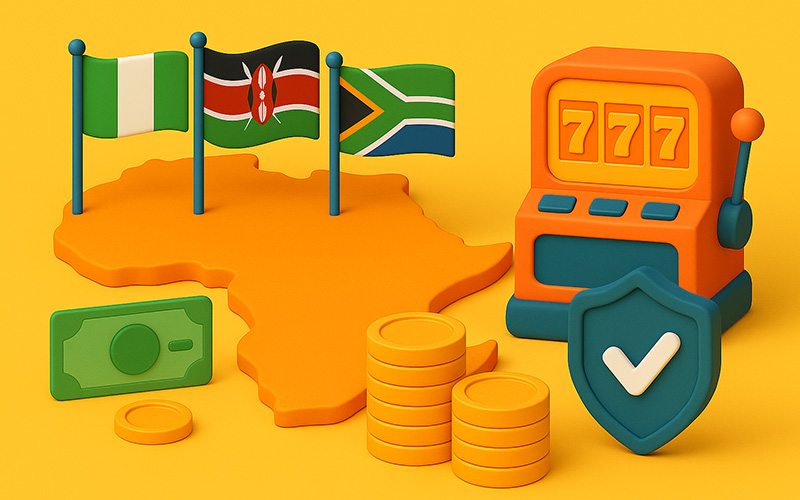
The continent is experiencing a period of active industry formation. Today, the region is one of the most promising yet controversial investment destinations in the world. The future of the market depends on whether governments can find a balance between filling their budgets and creating a competitive, transparent, and safe environment.
Several aspects determine the development of gaming in Africa:
- Fighting the grey economy through convenience, not prohibitions. The main threat to the legal vertical comes from accessible shadow platforms. To redirect players to the white field, operators need to ensure seamless integration of local payment solutions, products adapted to national requests, and a high level of security.
- Economically sound tax policy. Attempts to increase duties through tough fiscal measures often have the opposite effect: brands leave for offshore zones. A more sustainable approach is based on GGR rather than turnover. It allows for balancing the interests of businesses and the state, ensuring stable revenues in the long term.
- Technology as a management tool. Legislation does not work without efficient real-time control mechanisms. Success largely depends on how government bodies and specialised structures engage, enabling the rapid blocking of illicit payments and strengthening consumer protection.
Our team offers a wide range of solutions to ensure a smooth start and sustained growth in regulated jurisdictions. Feel free to contact us for more information on how we can help you on your entrepreneurial journey.

Have questions or want to order services?
Contact our consultants:
- e-mail: manager@casino-market.com
- feedback form.
Check the information used to contact us carefully. It is necessary for your safety.
Fraudsters can use contacts that look like ours to scam customers. Therefore, we ask you to enter only the addresses that are indicated on our official website.
Be careful! Our team is not responsible for the activities of persons using similar contact details.